
More and more AI platforms have entered the market in recent years. If you are responsible for IT or processes in your company, you face the question of which one fits your data, systems and requirements. This article helps you categorize the options and make an informed choice.
First, we explain what an AI platform is, how it differs from AI tools and which types exist. Then we compare 11 AI platforms, from cloud services to open-source frameworks, and show you what to look for when choosing one. Whether you should build a platform yourself or introduce a ready-made product is covered in our article AI software: make or buy.
Key takeaways
- An AI platform is the shared foundation on which a company brings together AI models, company data, permissions and interfaces in one place.
- AI tools solve a single task. An AI platform supports many use cases, teams and models with the same data and rules.
- There are four types: cloud and developer platforms, business AI platforms with company knowledge, specialist and process platforms, and open-source platforms and frameworks.
- The most important selection criteria are GDPR-compliant operation with hosting in the EU or on-premise, ready-made integrations with your systems, adoption of existing access permissions and a free choice of AI models without lock-in.
- The comparison of the 11 platforms covers all types. Many of them require development capacity, while ready-made business AI platforms become productive faster.
Table of contents
What is an AI platform for companies?
An AI platform is a technical infrastructure that gives companies and developers the tools and resources to build, train, deploy and use artificial intelligence applications in everyday work. It brings together in one place what would otherwise be spread across many individual tools: access to AI models, connections to company data, roles and permissions, interfaces to existing systems and automation features.
AI platforms support a range of use cases such as machine learning, data analysis, language processing, AI assistants and AI agents. For companies, the most important thing is that the platform knows their own data, respects access permissions and fits into existing business processes. Only then do individual experiments turn into AI use that works across the entire organization.
AI platform or AI tools: the difference
AI tools are ready-made tools for a clearly defined task: writing texts, summarizing meetings, answering questions as a chatbot or sorting emails. They are quick to introduce but usually work in isolation, each with its own login, its own data storage and its own rules.
An AI platform starts one level deeper and makes artificial intelligence usable for the whole company. It provides the shared foundation on which several applications, teams and models work with the same data and the same permissions. Instead of ten separate tools, you get an AI ecosystem that is managed centrally and grows with every new use case.
Looking for a ready-made tool for a single task instead? Then our overview of the best AI tools for companies will help you.
What types of AI platforms are there?
Not every AI platform pursues the same goal. When choosing, it helps to divide the offerings into four groups.
Cloud and developer platforms
The large cloud providers such as Microsoft, Google and AWS offer extensive AI services, for example the Azure AI Platform, Google Cloud AI or the AI services from AWS. Here you get computing power, AI models, APIs and tools for training and deployment. These platforms are very flexible but require development resources. You build the actual application yourself and adapt the technology stack to your requirements.
Business AI platforms with company knowledge
Business AI platforms are aimed at business departments and IT alike, in SMEs as well as in large enterprises. They connect a company's existing data sources, such as drives, Teams, emails or ticketing systems, and make this knowledge usable for search, chat and AI agents. The advantage: you don't have to develop anything yourself, you connect your systems and start with concrete tasks. What matters here is that existing access permissions are adopted and that the platform is operated in compliance with GDPR. The technical foundation for this is usually an enterprise search across all connected sources.
Specialist and process platforms
Some platforms specialize in one area, such as CRM, project management or process mining. Here, AI is part of the existing product or an add-on. This works well if most of your workflows take place in that system anyway. For knowledge outside the system, the reach remains limited.
Open-source platforms and frameworks
Open-source platforms and frameworks such as TensorFlow give you full control over models and code. An open-source approach suits companies with their own data science team that runs open-source models and open-source tools itself, for example on-premise in its own data center. The effort for operation, security and further development then lies entirely with you.
The best AI platforms for companies
In the following comparison, you'll get to know the most important AI platforms for companies and their strengths. The list deliberately mixes all types of platforms. Many of them require development capacity to be used effectively. If you're not sure whether you need such a solution or would rather go with a standard product, read our article on make or buy for AI software first.
1. Telekom AI Foundation Services
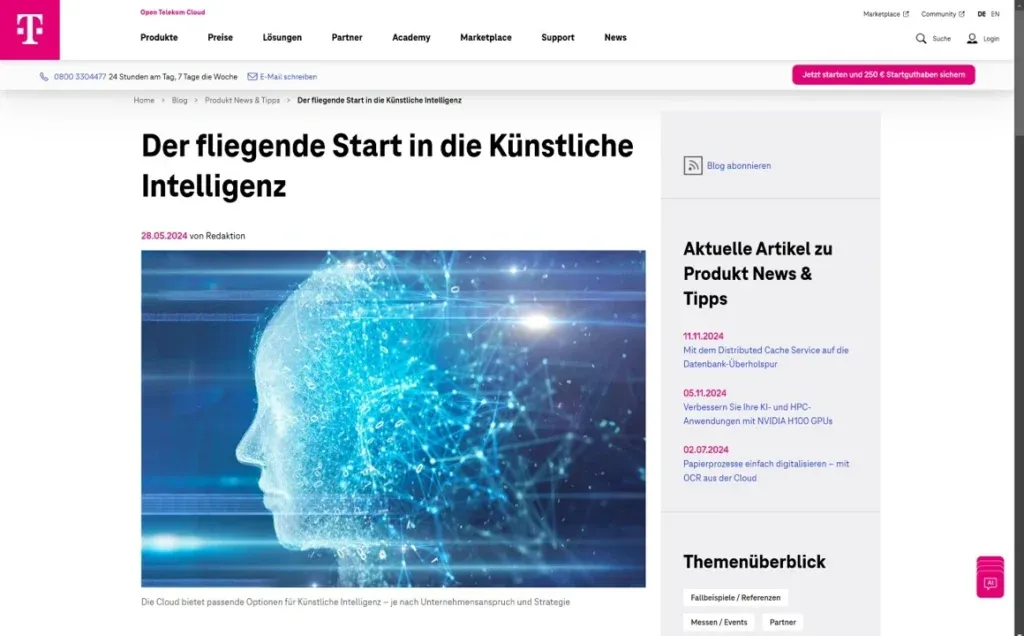
Telekom AI Foundation Services: help companies use and integrate AI technologies efficiently
Source: Open Telekom Cloud
With its AI Foundation Services, Telekom offers a European option and a central platform for accessing current language models. The platform serves as a hub through which developers access various large language models (LLMs) in compliance with GDPR. Companies benefit from standardized APIs and prebuilt Terraform modules and can integrate the Foundation Services into existing infrastructures and business processes. Building on this, teams develop their own AI solutions for their specific requirements.
Advantages:
- Simple API access to the latest LLMs and foundation models
- Scalable architecture with shared or dedicated resources
- Flexible pricing models, from pay-as-you-go to monthly fees for private instances
2. amber
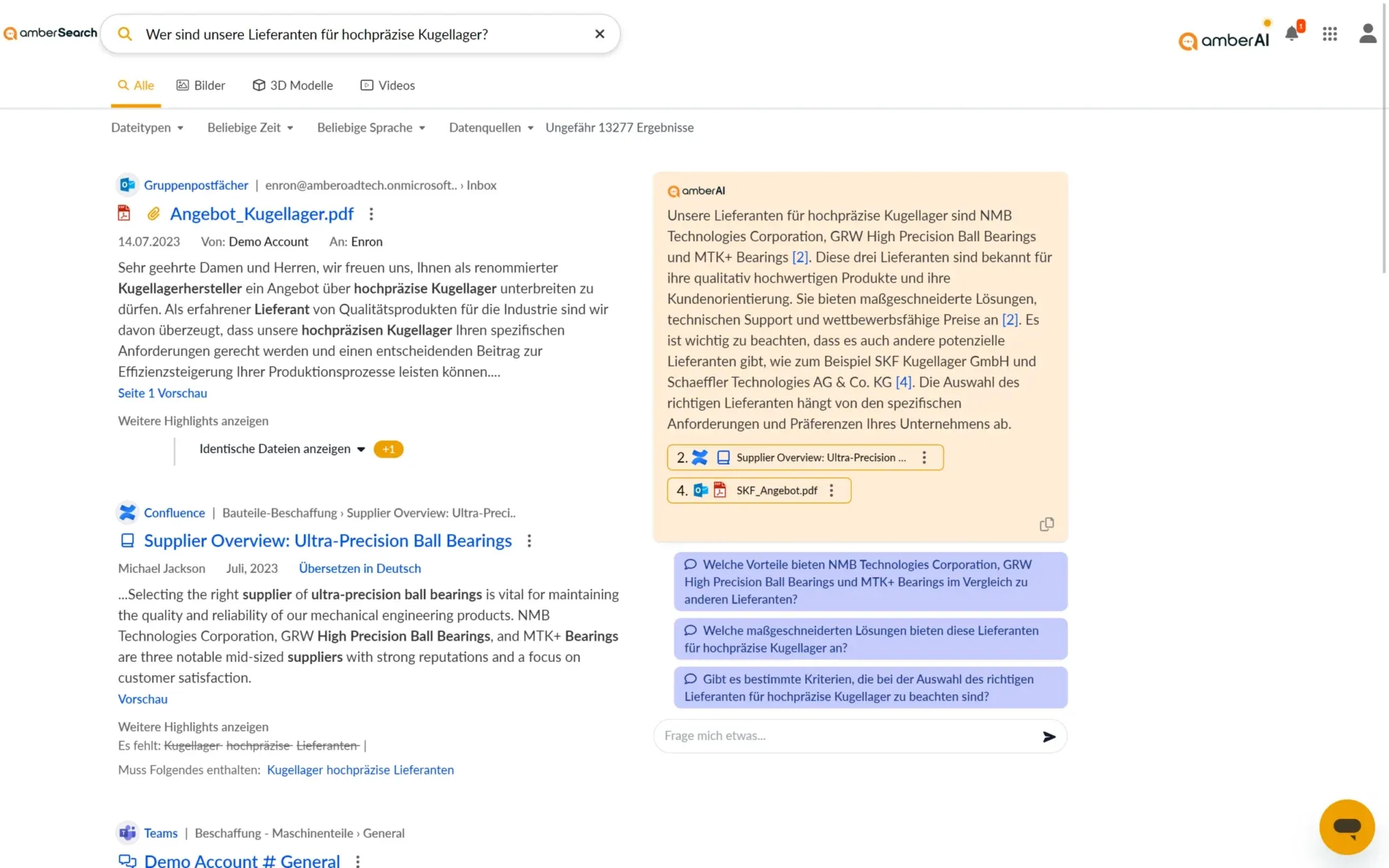
amber: the business AI platform that makes all internal knowledge available to employees, workflows and AI agents
Source: amber
More and more data silos, ever faster-growing volumes of data: almost every company knows this challenge. amber is a European business AI platform that connects knowledge from more than 70 data sources, a kind of "Google" for the company. With the amberSearch search, employees centrally access information stored in many different places, and AI agents, ticketing tools or workflow solutions can also use the internal knowledge. Existing access permissions are adopted automatically from day 1, with no migration and no second permission management. With more than 120 integrations, you connect your existing systems.
On this basis, amber offers the chat amberAI, in which every answer is based on company knowledge, AI agents with amberAgents, which automate recurring tasks without programming, and amberProjects as a shared place for team, knowledge and AI. There is no lock-in when it comes to AI models: the model can be chosen per task, while search, chat and agents stay the same. Hosting and data processing take place in Germany and Europe, amber is ISO 27001 certified and GDPR compliant. As an open platform, amber also gives developers the interfaces they need to integrate internal knowledge into further workflows.
Advantages:
- More than 120 integrations and more than 70 data sources, connected without migration and without copying data
- Permissions adopted from day 1 and free choice of models without lock-in
- Hosting in Germany and the EU, ISO 27001 certified, GDPR compliant
Would you like to see amber in your company? Then book a demo or try amber free for 30 days.
3. IBM Watson
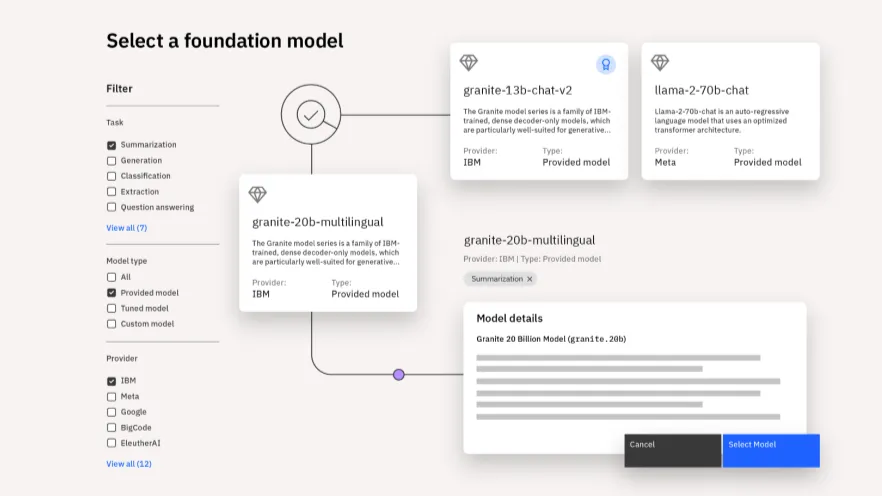
IBM Watson: build your own AI world in customer support
Source: IBM
IBM Watson is a cognitive platform that analyzes company data, delivers insights and supports decision-making. Employees benefit from personalized recommendations and intelligent information extraction. With some development effort, Watson can be integrated into existing business processes and applications. Developers get the tools and interfaces they need to build their own AI solutions for specific requirements.
Advantages:
- Comprehensive AI capabilities such as natural language processing and machine learning
- Scalable architecture for companies of all sizes
- Industry-specific solutions for sectors such as healthcare, finance and retail
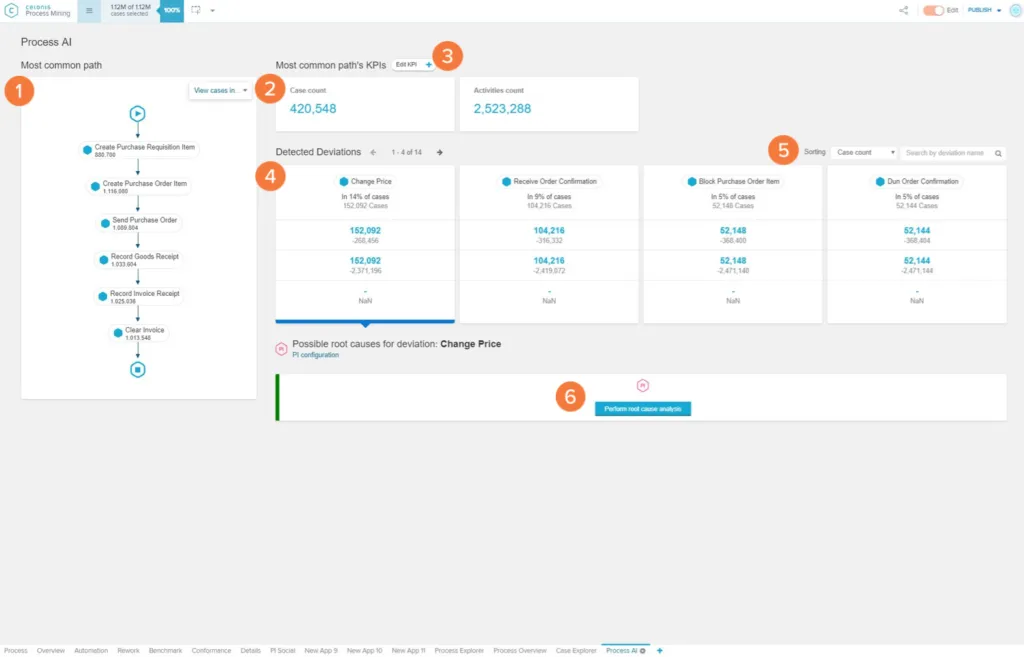
4. Celonis
Celonis: analyzes and optimizes processes to increase efficiency
Source: Celonis
As a process mining solution, Celonis focuses mainly on structured data. The platform analyzes process data, makes bottlenecks visible and thus supports decision-making. Employees benefit from real-time process analyses and data-driven improvement suggestions. Celonis can be integrated into existing business systems and offers tools and interfaces to develop your own process optimization solutions.
Advantages:
- Comprehensive process mining capabilities for real-time insights into business processes
- Automation and optimization of workflows for greater operational efficiency
- Scalable architecture for companies of all sizes and cross-industry solutions
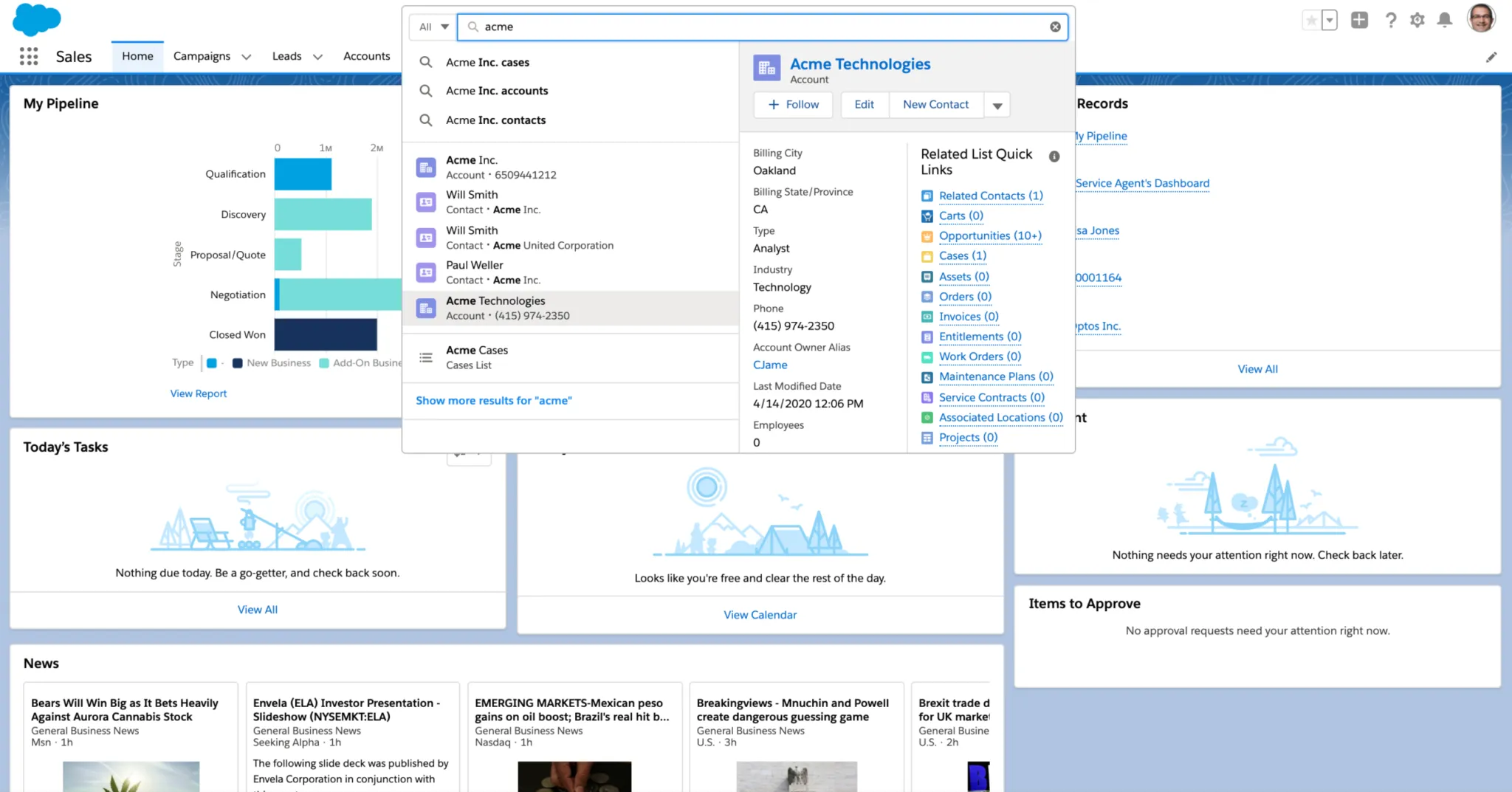
5. Salesforce Einstein AI
Salesforce Einstein AI: gets the most out of customer data in the CRM
Source: Salesforce
Companies collect more and more data about their customers, usually in their CRM. Salesforce is a provider of cloud-based CRM software and developed Einstein AI for this purpose. Einstein AI works as an integrated AI layer that analyzes customer interactions, delivers forecasts and automates business processes. Sales, service and marketing benefit from personalized recommendations and automated forecasts. Einstein AI is integrated into the Salesforce cloud solutions, and teams use various APIs to develop their own AI-powered applications.
Advantages:
- Native integration into the Salesforce platform for AI features directly in the CRM system
- Cross-departmental solutions for sales, service, marketing and commerce
- Continuous development of the platform by Salesforce
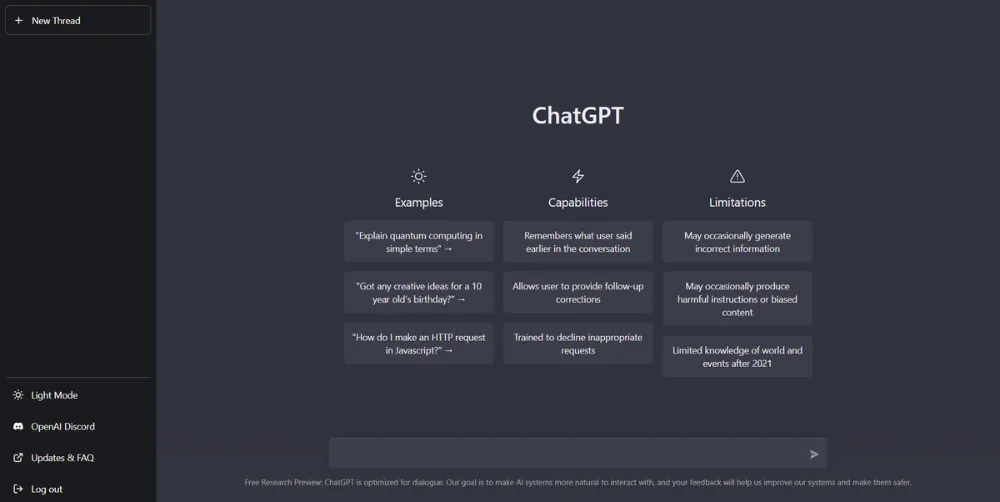
6. ChatGPT
ChatGPT: build your own workflows with OpenAI
Source: OpenAI
With the release of ChatGPT, OpenAI triggered a real AI hype. The platform works as a versatile digital assistant that understands natural language, completes tasks and generates texts. Employees benefit from automated text generation and information processing, and developers find the interfaces in the API to build almost any application. Before a company-wide rollout, check how ChatGPT can be connected to your data sources and how costs develop with intensive API use.
Advantages:
- Powerful language processing for a wide range of use cases
- Continuous development by OpenAI
- Adaptable platform for different industries and company sizes
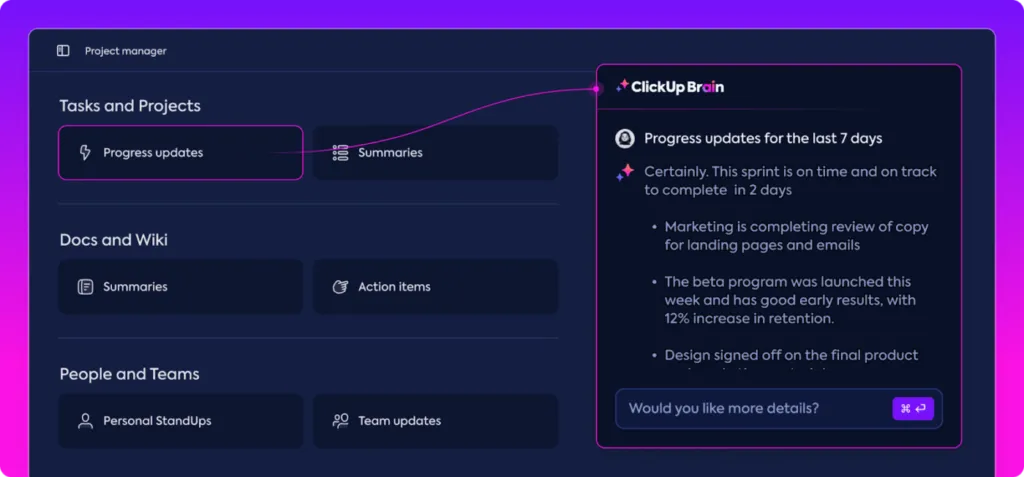
7. ClickUp
ClickUp: AI-powered project management
Source: ClickUp
Projects and processes in companies are becoming increasingly complex. ClickUp positions itself as an all-in-one platform for productivity and project management. At its core is ClickUp Brain, an AI feature that connects tasks, documents, team members and project information in a central workspace. Teams benefit from personalized workflows, automated routine tasks and AI-supported communication. Through extensive integrations, you connect ClickUp to existing business applications and map your own workflows.
Advantages:
- AI features such as automatic document creation and project status queries
- Customizable views and automations for different team structures and projects
- Extensive integrations with other tools
8. Google Cloud AI
Google Cloud AI: integrate AI into your own apps

Source: Google
With Google Cloud AI, Google provides its AI technologies as a cloud service for companies and app providers and combines them with the scalability of Google Cloud. Teams use machine learning models, natural language processing and computer vision and integrate them into existing processes and applications. Developers get tools, APIs and frameworks to build their own AI solutions.
Advantages:
- Access to Google's AI models and technologies
- Prebuilt APIs for implementing AI features
- Integration with other Google Cloud services for data analysis and data processing
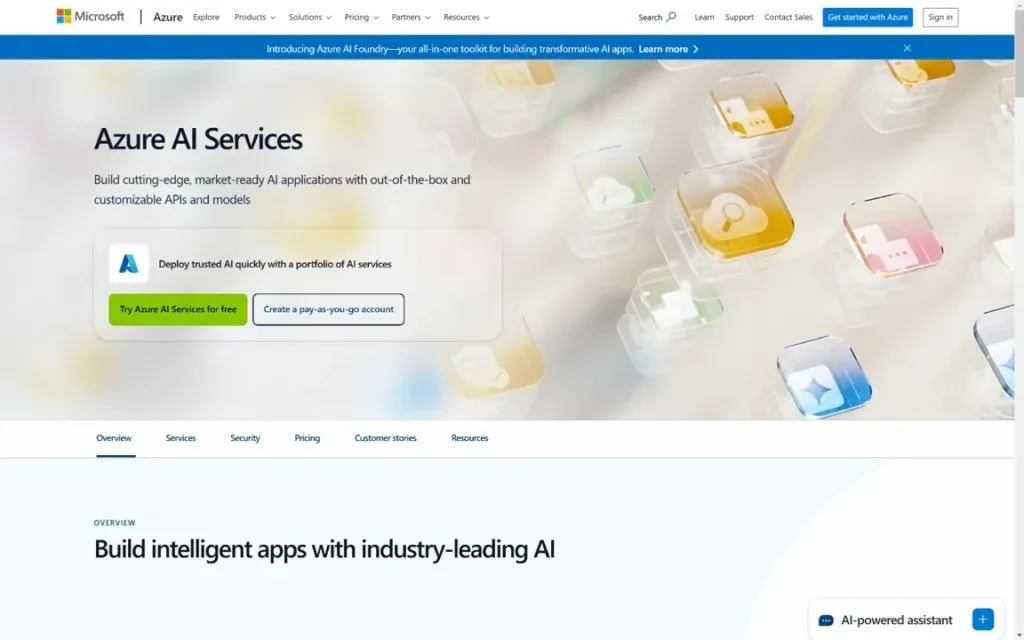
9. Azure AI
Azure AI: AI for companies in the Microsoft ecosystem
Source: Azure
Azure AI is Microsoft's central AI hub and combines modern AI technologies with the advantages of the Azure cloud. Employees benefit from pretrained models, cognitive services and machine learning products. With some developer resources, Azure AI can be integrated into existing business applications and processes. The platform is particularly suitable for companies that already rely heavily on Microsoft.
Advantages:
- Broad range of AI services, from language processing to computer vision
- Scalable architecture for companies of all sizes and cross-industry solutions
- Close integration with the Microsoft ecosystem and Azure services
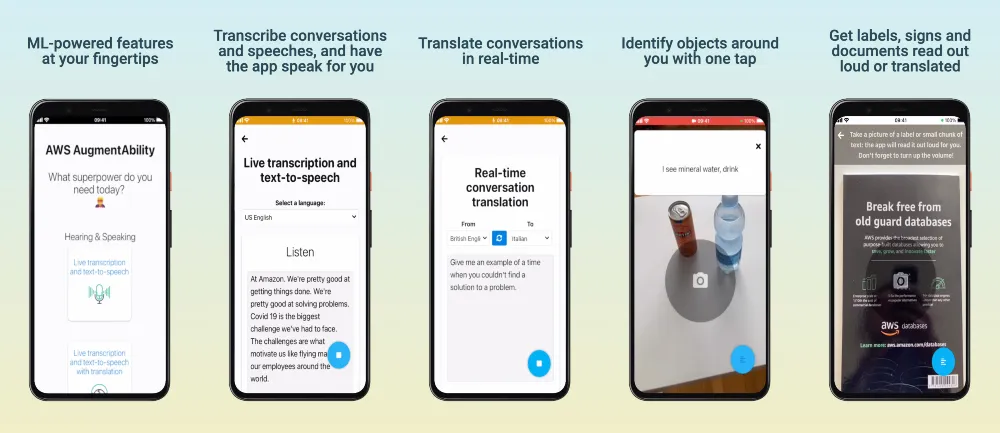
10. AWS AI
AWS AI: integrate artificial intelligence comprehensively into business processes
Source: AWS
Alongside Azure, AWS also offers various AI services. In combination with the AWS cloud, AWS provides numerous AI products and endpoints on which developers build services for their company.
Advantages:
- Extensive range of AI services for a wide variety of use cases, from customer service automation to fraud detection
- Scalable architecture and flexible pricing models for companies of all sizes
- Deep integration with other AWS services for a holistic cloud strategy
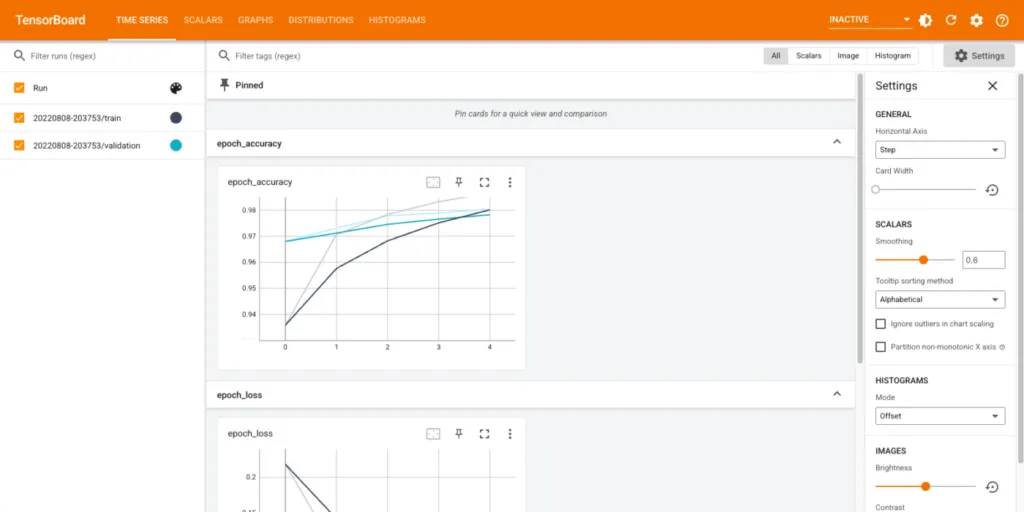
11. TensorFlow
TensorFlow: build and deploy powerful AI models yourself
Source: TensorFlow
TensorFlow is an open-source framework for developing and deploying AI solutions. It combines algorithms, data processing and model optimization in one flexible framework. Data scientists and developers benefit from a robust library for numerical computation and tools for deep learning. TensorFlow can be integrated into existing development environments and production systems and, as an open, extensible platform, offers the interfaces for custom AI solutions in business and research.
Advantages:
- Extensive library of prebuilt models and components for fast development
- Runs on various platforms, from mobile devices to high-performance computers
- Active community and continuous development by Google and open-source contributions
What are the benefits of AI platforms?
AI platforms help companies and developers alike to achieve their goals more efficiently. An AI platform simplifies access to technologies such as machine learning, natural language processing and data analysis. With business AI platforms, you don't even need programming skills.
The greatest benefit comes from consolidation: instead of every team buying its own AI tools, all users work on a shared foundation with the same data, rules and models. This brings concrete advantages:
- Faster implementation: New AI applications build on existing integrations and data instead of starting from scratch every time.
- More productivity: Recurring tasks and workflows can be automated, and knowledge can be found faster.
- Better decisions: Analyses are based on current company data rather than gut feeling.
- Control and governance: Data protection, roles and access permissions are managed centrally instead of tool by tool.
- Scalability: The infrastructure grows with the company and with the number of use cases.
The potential challenges of AI platforms
AI platforms offer many advantages but are not without challenges. If you want to invest in such a solution, you should be aware of these hurdles:
- Costs: Building your own AI platform can be expensive. The more extensive and complex the desired features, the more time and resources are needed. You also need to plan for regular updates so that the platform stays technologically up to date.
- Security risks and data protection: Handling sensitive data often raises concerns. It becomes especially critical when personal data is used without consent or when data processing takes place outside the EU. In addition, AI systems can be vulnerable to cyberattacks.
- Access permissions: When an AI platform accesses company data, it must respect the same permissions as the source systems. Otherwise, employees will see content that isn't meant for them.
- Data dependency: Without high-quality and sufficient data, AI cannot function. The platform needs current and accurate data to perform its tasks successfully.
- Bias and fairness: The quality of AI depends directly on the data it is trained with. If this data contains bias or imbalances, the AI can deliver problematic results, which can damage your reputation if it goes unnoticed.
Despite these challenges, the advantages outweigh them. With careful planning and a deliberate choice of platform, you can overcome these hurdles.
How to choose the right AI platform for your company
Choosing the right AI platform depends on your goals, your data and your resources. You should check these criteria when making your choice:
- Data protection and hosting: Make sure the platform works in compliance with GDPR and check where the data is processed. Hosting in Germany or the EU, ISO 27001 certification or an on-premise option are mandatory for many companies.
- Integrations: An AI platform is only as good as the data it can access. Check whether there are ready-made connectors to your systems, for example to Microsoft Teams, drives, emails, ERP or ticketing systems, and whether the platform can be connected without migration.
- Permission concept and governance: The platform should adopt existing access permissions instead of requiring a second permission management. This includes roles for admins and users as well as clear rules on who may use which AI features.
- Model choice without lock-in: AI models evolve quickly. A good platform lets you choose the model per task and switch later without rebuilding search, assistants or agents. If you need full control, also consider open-source models.
- Make or buy: Developer platforms offer a lot of freedom but need a team for development and operation. Ready-made business AI platforms become productive faster. Which suits you better depends on your resources and requirements.
- Core features for your own models: If you develop models yourself, the platform should be able to clean and process data efficiently, train models with different algorithms, evaluate their performance reliably and deploy finished models. AutoML features help you find the right algorithm automatically.
- Usability and adoption: The platform should be easy to use, with an intuitive interface that makes it accessible to beginners as well. Learning resources and responsive support speed up adoption.
Typical use cases for AI platforms in companies
Which use cases are worthwhile depends on industry and company size. These topics come up in SMEs and large enterprises alike:
- Finding knowledge: Employees ask an AI assistant instead of searching through drives, wikis and emails. This also speeds up onboarding for new colleagues. Our overview of
Ready to work more efficiently?
Sign up with your company email address and try amber for yourself today. Upload documents, connect the tools you use every day and let amber take work off your hands.
Try amber free for 30 days. No credit card required.