
AI Agents & Assistants
What is an AI assistant? Opportunities, limits and how it differs from an AI agent
What an AI assistant is, how it works, which types exist and how it differs from an AI agent.
Companies are talking more and more about AI. The rollout of technologies such as Google Assistant and Copilot for Microsoft 365 has shown how they have evolved since their launch and what impact they have on productivity and the user experience. Large language models, retrieval augmented generation, AI agents and AI assistants are technical terms that come up again and again. This article is mainly about the meaning and function of AI assistants and how they are applied in new ways.
What is an AI assistant? Definition and how it works
An AI assistant is a system designed to support people in their daily work. The assistant always acts reactively, however, and needs human input to become active. Once it is active, it is programmed to solve a specific task efficiently.
Where AI assistants are used: from Siri to enterprise tools

Typical examples of AI assistants can already be found in many places in everyday life. In private life, they include voice assistants such as Siri or Alexa. At work, they are often chatbots or other interaction systems that assist people in their daily tasks.
The areas of application in a company can therefore vary widely (and span different departments). Classic assistants can be found, for example, as intelligent chatbots on websites that take pressure off customer support, in tools for appointment management or in data analysis. The amber solution is also one of these AI assistants: it gives users efficient access to information.
The technology behind AI assistants: natural language processing and artificial intelligence
At the core of AI assistants are systems based on natural language processing (NLP), which in turn is a sub-discipline of AI. This technology is designed to understand and process human language and to interact with it.
NLP is mainly used to analyze the semantic meaning of the words entered rather than the individual words themselves, as is the case with a classic keyword-based search, for example. When an assistant receives a task, it can generate a suitable response based on the algorithms it has been given.
How an AI assistant works: from input to smart interaction
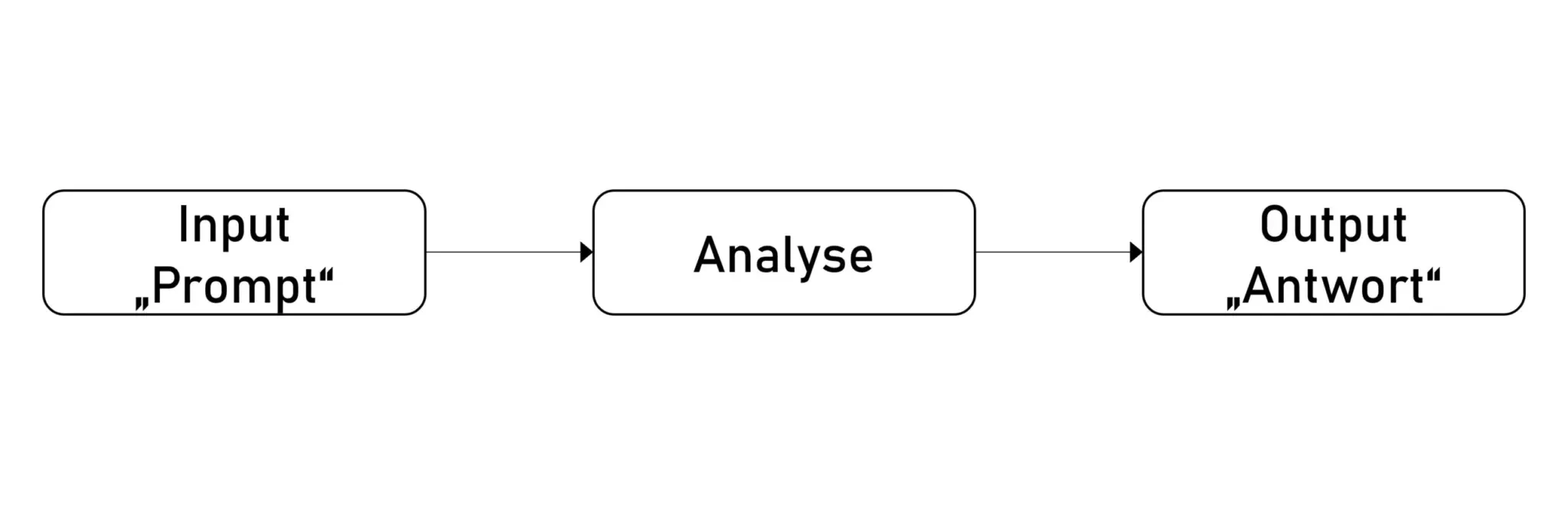
By default, the process starts with the input, which is usually text or speech (most of the time, the input is simply called a prompt). A language processing module uses machine learning algorithms to analyze the semantic meaning and determine the most sensible answer on that basis. This smooth interaction allows users to communicate with the system efficiently.
Despite their impressive capabilities, AI assistants are limited to certain use cases and areas of responsibility. Their performance depends heavily on the quality of the underlying data and models, as well as on their ability to extract relevant information from context. These limitations show that AI assistants are primarily tools that support human work rather than replace it entirely.
Types of AI assistants
AI assistants can be divided into different categories depending on how they are used and which tasks they perform. Some of the most common types of AI assistants are:
This variety shows how wide the range of uses for AI assistants is and how they can provide support in different areas of daily life and work.
AI assistant vs. AI agent: the core difference
Anyone who takes a closer look at AI in companies will sooner or later come across the term AI agent or even multi-agent systems.
The core difference lies in how they act: an AI assistant is reactive and only becomes active when a person makes a request. An AI agent, by contrast, is an autonomous system that makes its own decisions and acts independently to reach a given goal.
| Feature | AI assistant | AI agent |
|---|---|---|
| Approach | Reactive: waits for a request | Proactive: pursues a given goal |
| Task | Completes a specific, predefined task | Plans and completes the necessary steps on its own |
| Examples | Voice assistants such as Siri or Alexa, chatbots | Autonomous logistics systems, business process optimization |
Approach
- AI assistant
- Reactive: waits for a request
- AI agent
- Proactive: pursues a given goal
Task
- AI assistant
- Completes a specific, predefined task
- AI agent
- Plans and completes the necessary steps on its own
Examples
- AI assistant
- Voice assistants such as Siri or Alexa, chatbots
- AI agent
- Autonomous logistics systems, business process optimization
Because they interact directly with people, AI assistants are far more visible in everyday life, while agents tend to be embedded in processes in the background. What exactly defines an AI agent and how it works step by step is explained in our article AI agent: definition and simple explanation.
Pros and cons of AI assistants in business
Like all systems, AI assistants have both advantages and challenges. This section therefore compares the pros and cons.
Advantages
Classic advantages of AI assistants include finding information in everyday work using enterprise search, taking routine tasks off people’s hands and improving the user experience. This allows companies to achieve considerable gains in efficiency and productivity.
Challenges
On the other hand, there are open questions around data protection, the need for human control and interaction, and the existing limitations due to the reactive nature of assistants.
After the first phases of euphoria about the new technology, many companies have become disillusioned. A chatbot is not the solution to every problem. To add real value, the right use cases have to be defined and a smart integration (e.g., using connectors) has to take place. Only then will AI assistants be able to deliver the promised added value.
As a result, methods such as retrieval augmented generation (RAG), multi-hop question answering and others are being built into many AI assistants to make them “fit” for everyday use.
AI assistants working together with other systems
An AI assistant does not have to work alone. It can, for example, be combined with an AI agent that runs in the background. The assistant remains the interface to people: it answers questions, explains and informs.
IT support in companies
- AI assistant: A virtual assistant helps solve everyday IT problems by providing instructions or answering tickets.
- In the background: An agent monitors the network, resolves problems proactively and informs the assistant, which then notifies the IT team and the affected users.
Following the same pattern, a chatbot in customer service can answer customer questions while feedback is analyzed in the background. Combinations like these are promising but complex to implement. Our guide to AI agents for businesses shows how businesses introduce agents themselves.
The future of AI assistants

The future of AI assistants is promising and will probably be shaped by the growing integration of AI technologies into different areas of daily life. Some of the trends expected in the future are:
Overall, the future of AI assistants will be shaped by the growing integration of AI technologies into different areas of daily life and will probably lead to improvements in productivity, efficiency and quality of life.
Enjoying our content?
Frequently asked questions about AI assistants
What is an AI assistant?
An AI assistant is a system that supports people in their daily work. It always acts reactively, which means it needs human input, and it is programmed to solve a specific task efficiently.
What technology is behind AI assistants?
The core technology is natural language processing (NLP), a sub-discipline of AI. NLP mainly analyzes the semantic meaning of the words entered rather than the individual words themselves, as a classic keyword-based search does.
What is the difference between an AI assistant and an AI agent?
An AI assistant is reactive and needs explicit input from a person. An AI agent is an autonomous system that proactively makes its own decisions and acts on them to reach predefined goals.
What types of AI assistants are there?
The most common types include virtual assistants, chatbots, AI search assistants, AI email assistants, AI scheduling assistants, AI transcription assistants and AI writing assistants.
What are the pros and cons of AI assistants in business?
Advantages include finding information with enterprise search, taking routine tasks off people’s hands and a better user experience. Challenges are data protection questions, the need for human control and limitations due to their reactive nature.
How can AI assistants and AI agents be combined?
The two approaches complement each other, for example in IT support: the assistant answers tickets, while the agent monitors the network, resolves problems proactively and informs the assistant, which then notifies the IT team and users.