
AI Agents & Assistants
One copilot to rule them all
Why an AI assistant only delivers real value when it works across all systems instead of being limited to a single provider's ecosystem.

Generative AI will be an integral part of our everyday lives in the future and companies are already looking at how they can use generative AI sustainably within their organisation. The simplest use case for generative AI in a company is a classic assistant that helps an employee to process internal expertise faster and better. With the hype that has been building since 2023, every company wants or needs to be involved. But how can an internal AI-based assistance system be used as efficiently as possible?
The status quo for comprehensive, AI-based assistance systems
Various CRM, archive system and intranet providers have been developing their own co-pilots since 2023 or assistance systems to cover the various use cases of generative AI in the company – including Microsoft, of course, but more on that later. A supposedly simple solution for customers to introduce generative AI. However, there is a catch:
Companies use various IT systems and so far the assistance system (or copilot, buddy, secretary, etc.) only supports the software ecosystem of the respective provider. And from a technical perspective, this will not change, as traditional software providers will not have enough resources to support a cross-system assistance system. For customers, this means that they will have to decide in favour of one system or buy the respective AI-based assistance system (if available) for each individual tool at great expense.
In the long term, this is both expensive and frustrating for the employee, as they will never have truly comprehensive access, but will always remain limited to the ecosystem of a specific provider. It therefore makes sense for companies to pool their existing resources and invest in a comprehensive, AI-based assistance system. However, if you try to bundle all information in one ecosystem and also use the provider’s AI-based assistance system, the vendor lock-in increases again.
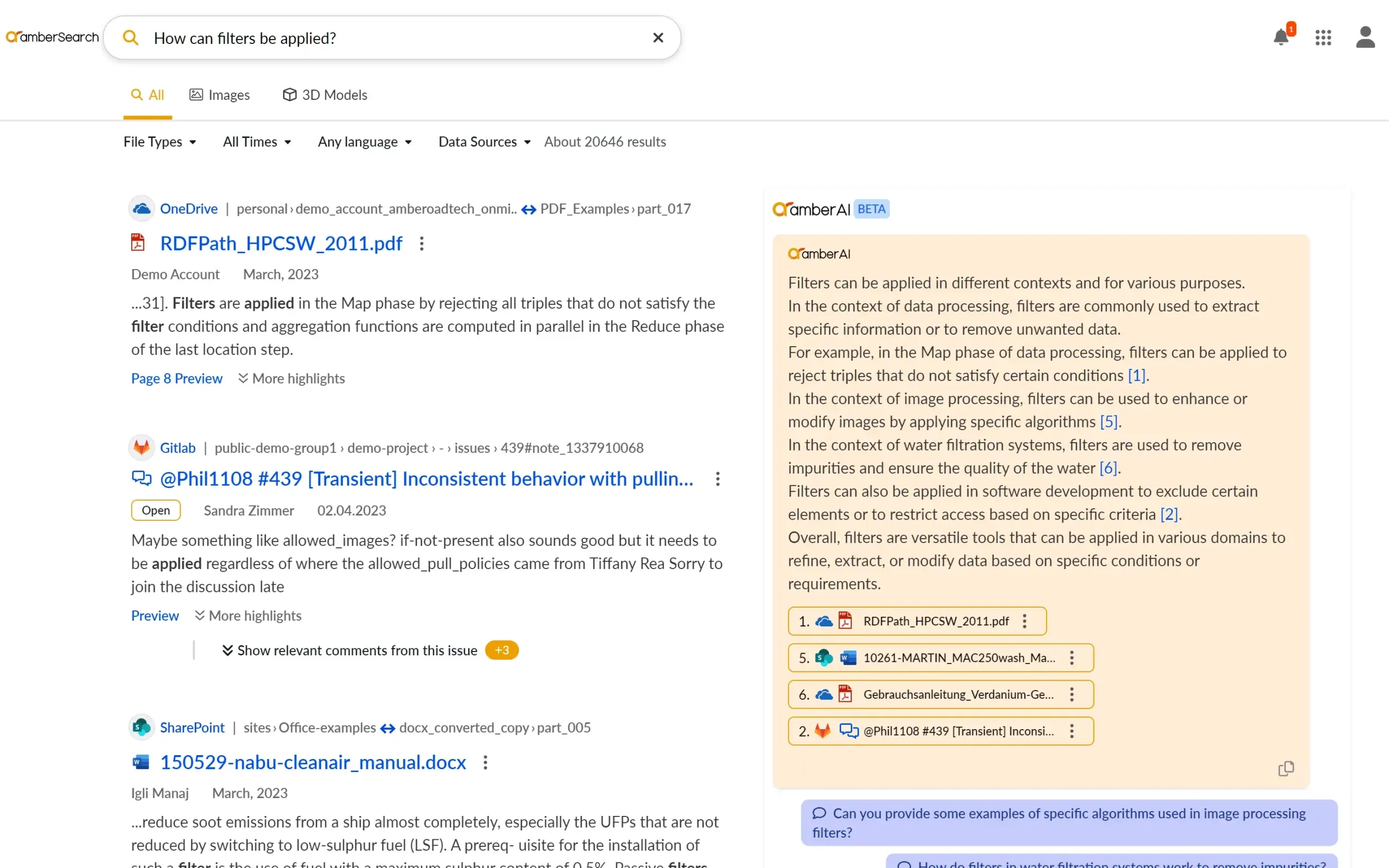
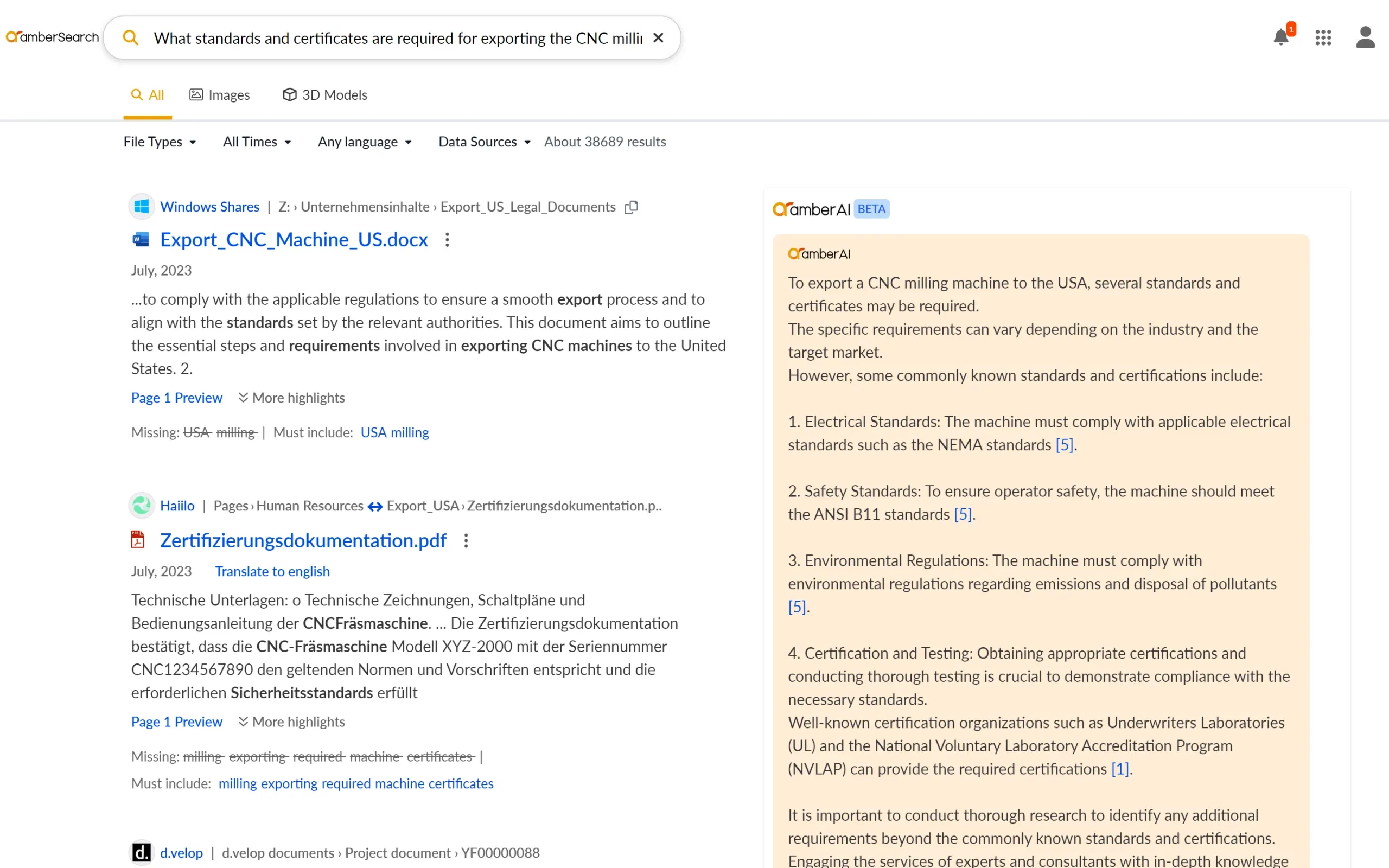
In order to introduce an AI-based assistance system in compliance with the GDPR, a number of requirements must be met, such as the consideration of access rights or appropriate hosting. Another advantage of a corresponding assistance system, particularly in terms of sustainability, is that it does not need to be retrained. Retrieval augmented generation is therefore the technology used to implement such a system. The linked blog article explains how amberAI works. This enables amber to provide corresponding assistants without training a customised AI model.
The fact that Retrieval Augmented Generation uses a two-stage process (first rights-based search in an index, then context-based generation of an answer) means that the above-mentioned requirements can be met and there is no need to train a custom AI model. This makes the use of generative AI much more sustainable, as otherwise a separate AI model would have to be constantly updated (see blog post on self-trained AI models).
01
Rights-based search
First, an index is searched, taking access rights into account.
02
Context-based generation
Then an answer is generated from the content found.
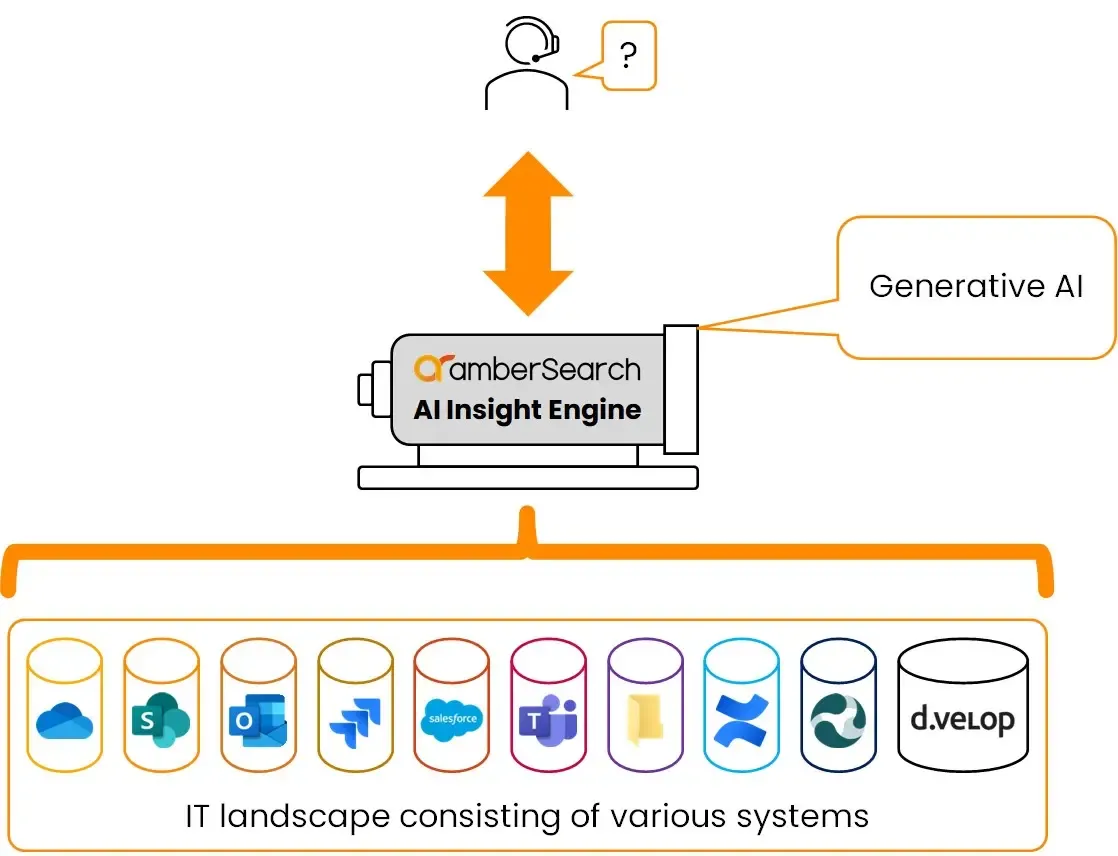
How is a cross-system AI-based assistance system implemented?
At amber, we have taken our enterprise search as the basis for our assistant amberAI. This enables us to use standard connectors to establish the connection to the company’s various IT systems (e.g. M365, Atlassian, network drives, d.velop & Co) and to take the existing access rights into account during the search process.
As we know that our customers’ IT resources are limited, amber and amberAI are designed in such a way that the solution can be implemented with minimal effort (<0.5 days) with help. From a technical point of view, this includes the integration of other systems into amberAI on the one hand, but also of amberAI into the operational systems on the other.
An exciting realisation that we have at amber: An AI-based assistance system will only be used by employees if it is seamlessly integrated into the existing systems. That’s why we at amber have created various options for our users to be able to utilise amberAI, including:
- Web app
- Teams app
- Desktop app
- Mobile optimisation
- Iframe for all iframe-capable systems
- Chrome plugin
When selecting a comprehensive AI-based assistance system, it is important to ensure that it can be integrated into the IT systems and that it enables better availability in the existing IT systems. We have also written a blog article that deals explicitly with this topic.
How much effort is involved in integrating a comprehensive AI assistant?
The actual implementation effort always depends on the specific circumstances. But if amberAI is to be hosted as a managed service, then app registrations must be set up for online systems and a VPN in connection with service accounts for on-premise systems. The technical effort for implementation is therefore less than 0.5 days.
From the outside, however, it is difficult for us to see how complex the approval processes are so that an IT administrator can carry out the corresponding steps. Anyone working with this technology should have a basic understanding of the technology so that expectations can be realised.
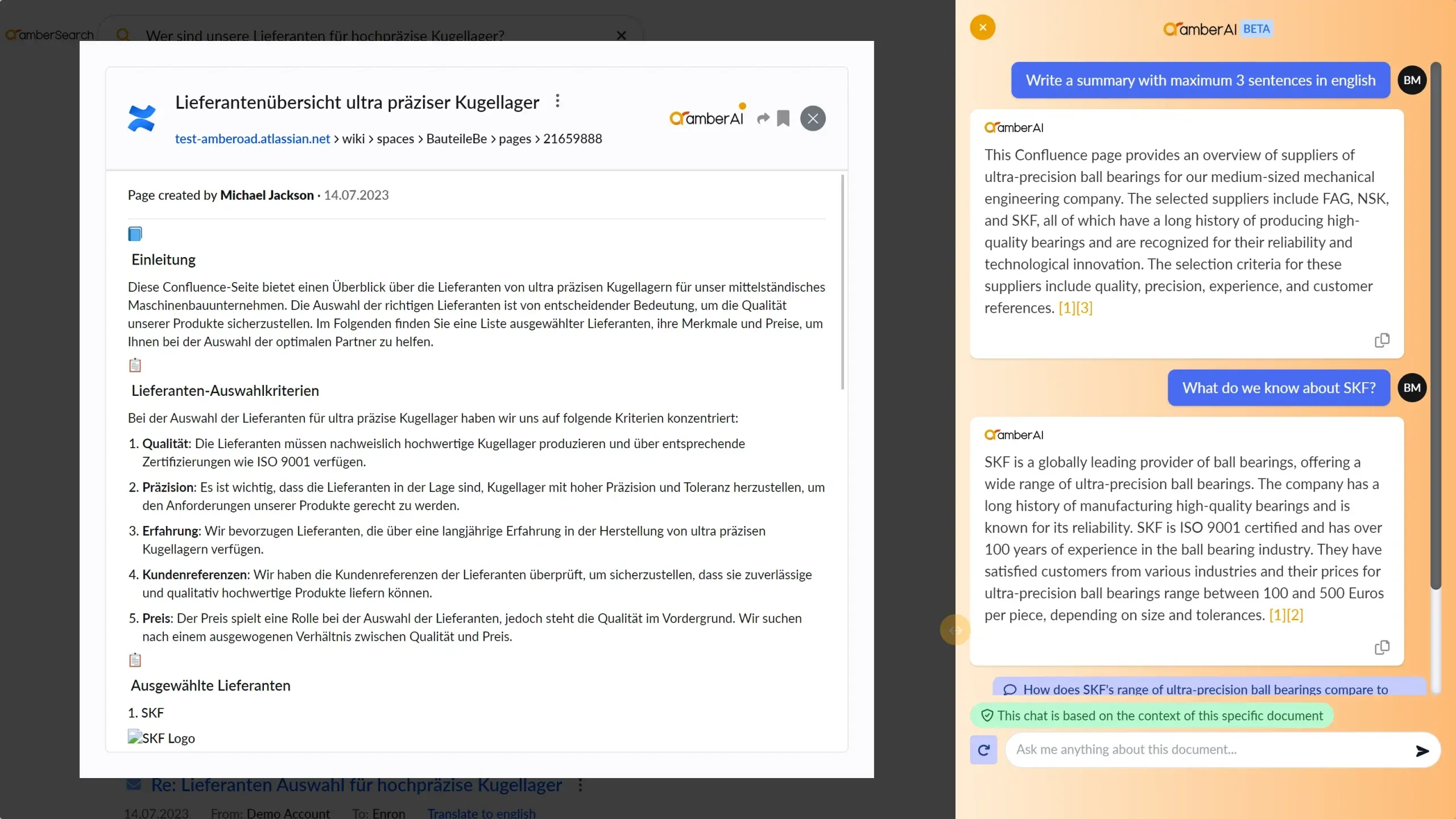
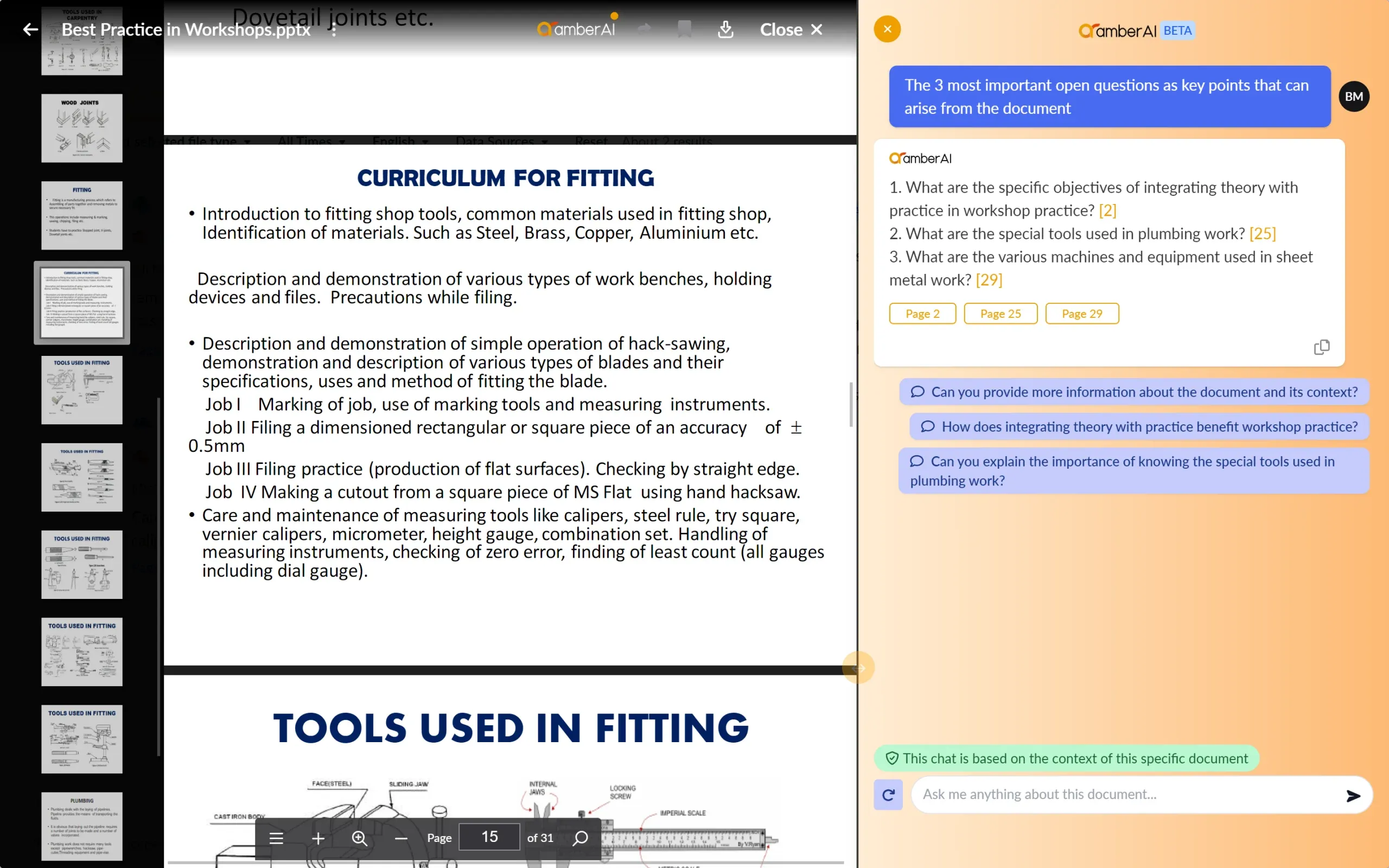
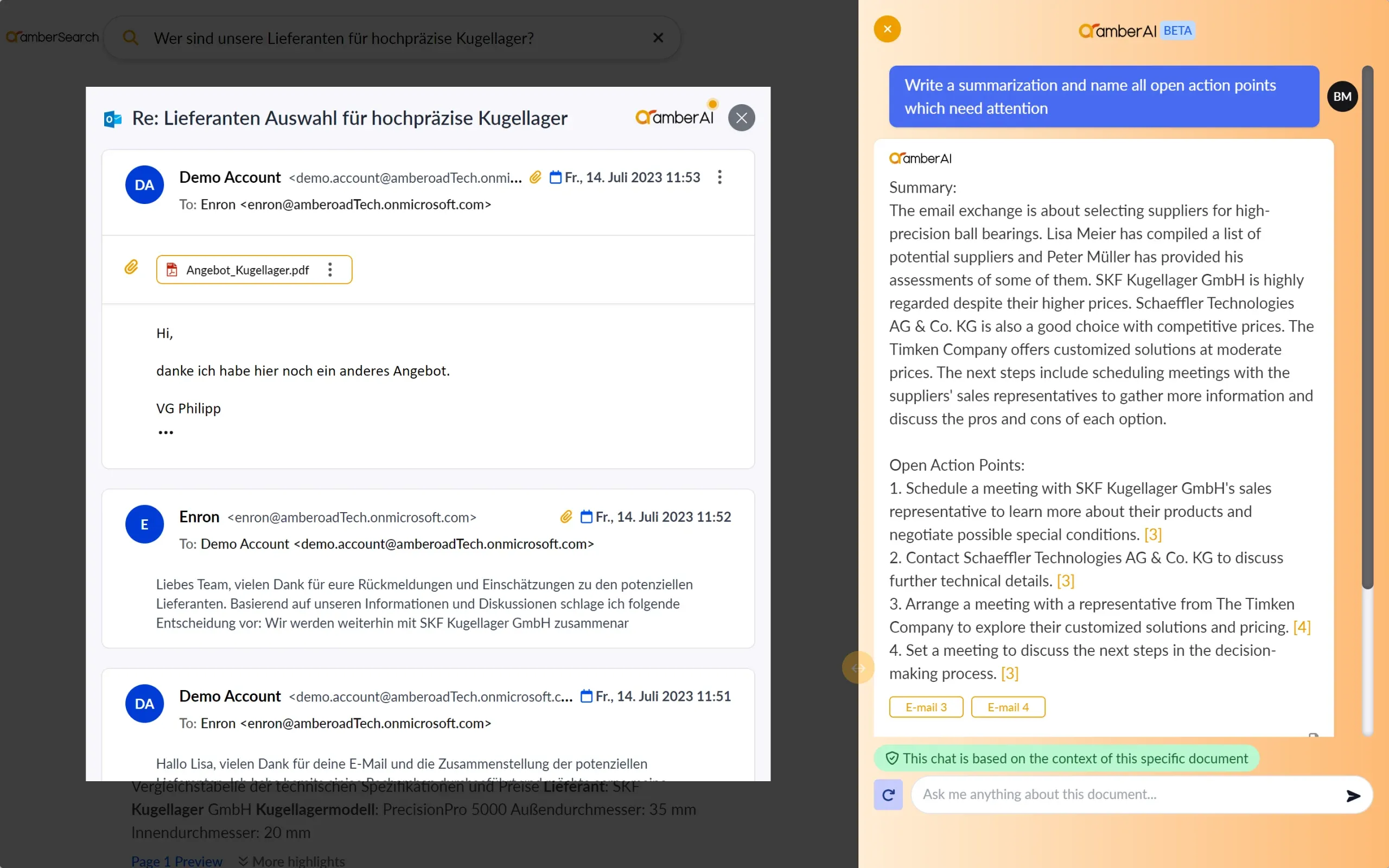
Chat with documents
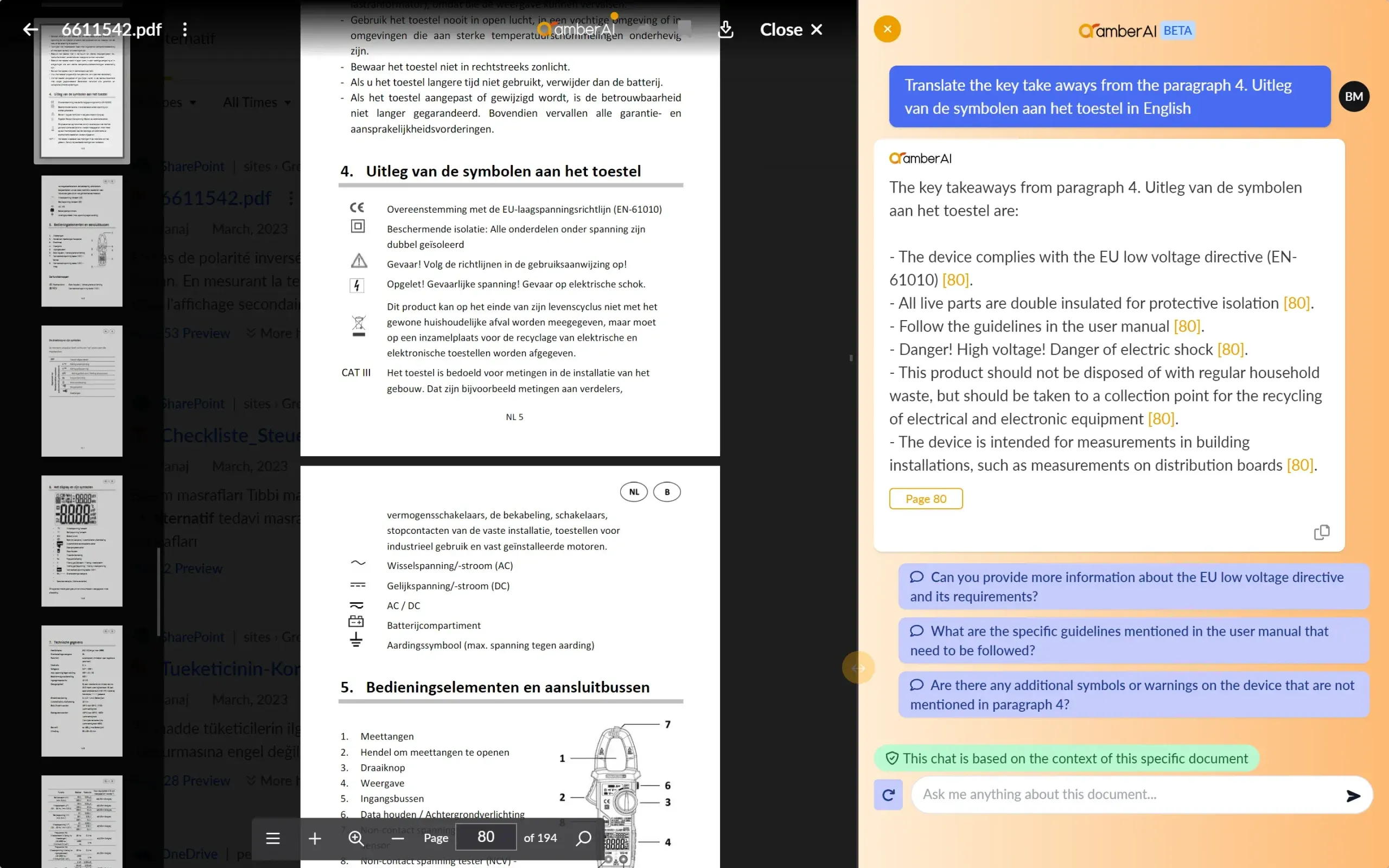
The cross-system use of such systems is a use case for AI-based assistance systems. Another extremely high added value is chatting with documents or internal company content. If an assistance system does not offer this added value, employees will switch to using any online tools that have not been approved by IT to create summaries or analyses of documents. This is why a good AI-based assistance system is also able to solve such use cases:
Try amberAI
To illustrate our convictions, we at amber rely on the motto ‘show, don’t tell’. That is why you can try amber yourself. Sign up with your work email. You will then be guided through onboarding by email. After that you can get started right away. If you connect your own systems, you will see how amber works with your own content. The trial is free for 30 days, no credit card required.
Our short video shows a few use cases: Watch “What is amberAI: A few use cases”
amberAI vs. Microsoft Copilot
Many companies use various Microsoft products and are therefore considering Microsoft Copilot as a potential investment. However, Microsoft is not exactly making it easy for customers (as of Q4 2023) to use Copilot. For this reason, we have taken the time to explicitly position ourselves against Microsoft’s Copilot in this blog article.
Frequently asked questions about a cross-system copilot
What is a cross-system copilot?
An AI-based assistance system that does not only support one provider's software ecosystem, but uses connectors to access a company's various IT systems, such as M365, Atlassian, network drives or d.velop.
Why are the copilots of individual software providers not enough?
They only support their own ecosystem. Companies would have to choose one system or buy a separate AI assistant for each tool. That is expensive, frustrating for employees, and bundling all information in one ecosystem increases vendor lock-in.
Does an AI assistant have to be trained on company data?
No. With retrieval augmented generation, an index is first searched based on access rights, then an answer is generated from the context. This meets requirements such as access rights, and no custom AI model has to be trained and constantly updated.
How much effort does it take to introduce amberAI?
As a managed service, app registrations are set up for online systems and a VPN with service accounts for on-premise systems. The technical effort is less than 0.5 days; internal approval processes come on top.
How can employees use amberAI?
Among other things as a web app, Teams app and desktop app, optimised for mobile, as an iframe in iframe-capable systems and as a Chrome plugin. An AI assistant is only used if it is seamlessly integrated into existing systems.
Why is chatting with documents so important?
If an assistance system does not offer document chat, employees switch to online tools that have not been approved by IT to create summaries or analyses of documents.