
Enterprise Search
Digital transformation in R&D departments: How AI-based solutions can help
How R&D departments break up data silos, learn from past experiments and make their knowledge findable with AI.
Few departments in companies are as knowledge-intensive as the R&D department. And unlike other departments, knowledge in R&D does not expire, but must be used again and again. This is especially true for companies where know-how is the most important asset.
The two big challenges of R&D departments
At the same time, R&D departments mostly have the same problems. They too are going through the digital transformation, have information stored on network drives, M365, the intranet or in the DMS and have to ensure that all colleagues always have access to the latest knowledge.
Now R&D departments are facing 2 big challenges:
- How to make decentralised knowledge accessible to all employees – preferably without introducing a new data silo?
- How can lessons be learned from past experiments, even if the information comes from different documents?
A lot had happened in these areas by early 2023. On the one hand, software solutions are developing towards becoming more open and more interconnected via so-called interface access, on the other hand, the new developments in the field of AI enable completely different use cases.
How can data silos be broken up?
The problem with data silos is that employees – as soon as they are looking for information – are usually faced with the following questions:
- Where do I have to look?
- What do I have to look for?
- Who can I ask for help?
In most companies there are several logically correct filing locations. As a consequence, a lot of time is spent on internal research, asking around (and distracting colleagues from their work) and re-working information.
In the field of R&D, this often leads to the fact that lessons already learned on a topic are not taken into account and the same mistakes or experiments/sub-projects are made again.
- per employee per day are invested to get the relevant information, according to our clients
- 25–30 min
- of working time per employee per year are lost to internal research alone
- ~3 weeks
According to our clients, they invest between 25 and 30 minutes per employee per day to get the relevant information. This quickly translates into lost time per employee of almost 3 working weeks per year, which are only used for internal research.
What is the solution?
Due to the fact that IT landscapes are usually grown historically, they are very heterogeneous. And each solution often has its own justification for existence. The solution to this challenge is a higher-level layer that provides the employee with a central point from which he can search the different systems. This changes the workflow as follows:
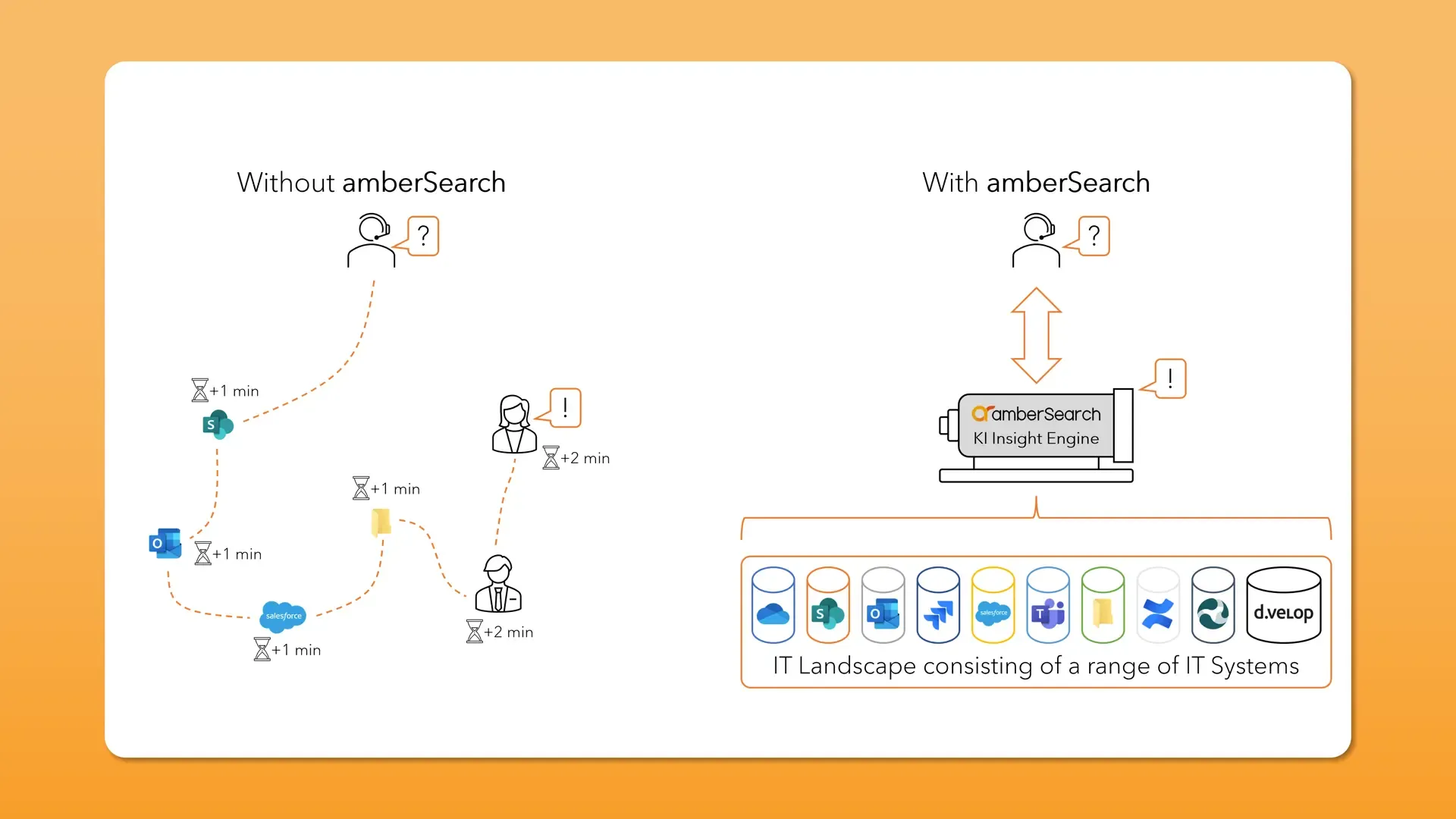
The employee no longer has to rely on colleagues and the sometimes better, often worse search function of other systems when researching, but can search all systems with a cross-system search solution with a search syntax. This not only increases employee satisfaction, but also reduces search time by up to 40%.
The advantage of amber
amber uses the latest developments in artificial intelligence to provide the employee in the company with the UX he knows from his private life. amber is designed in such a way that it can also be used in companies with limited IT resources with very little effort. Our goal is to ensure that medium-sized companies can also benefit from the added value of modern technologies – of course taking into account the GDPR.
In addition, with amber, text documents (including scanned documents), images, Teams messages, emails, 3D models, and all office files can be intelligently searched in full text.
How can artificial intelligence be used in the field of R&D?
Few technologies were as present in the media in early 2023 as ChatGPT. However, ChatGPT only works with know-how from the internet.
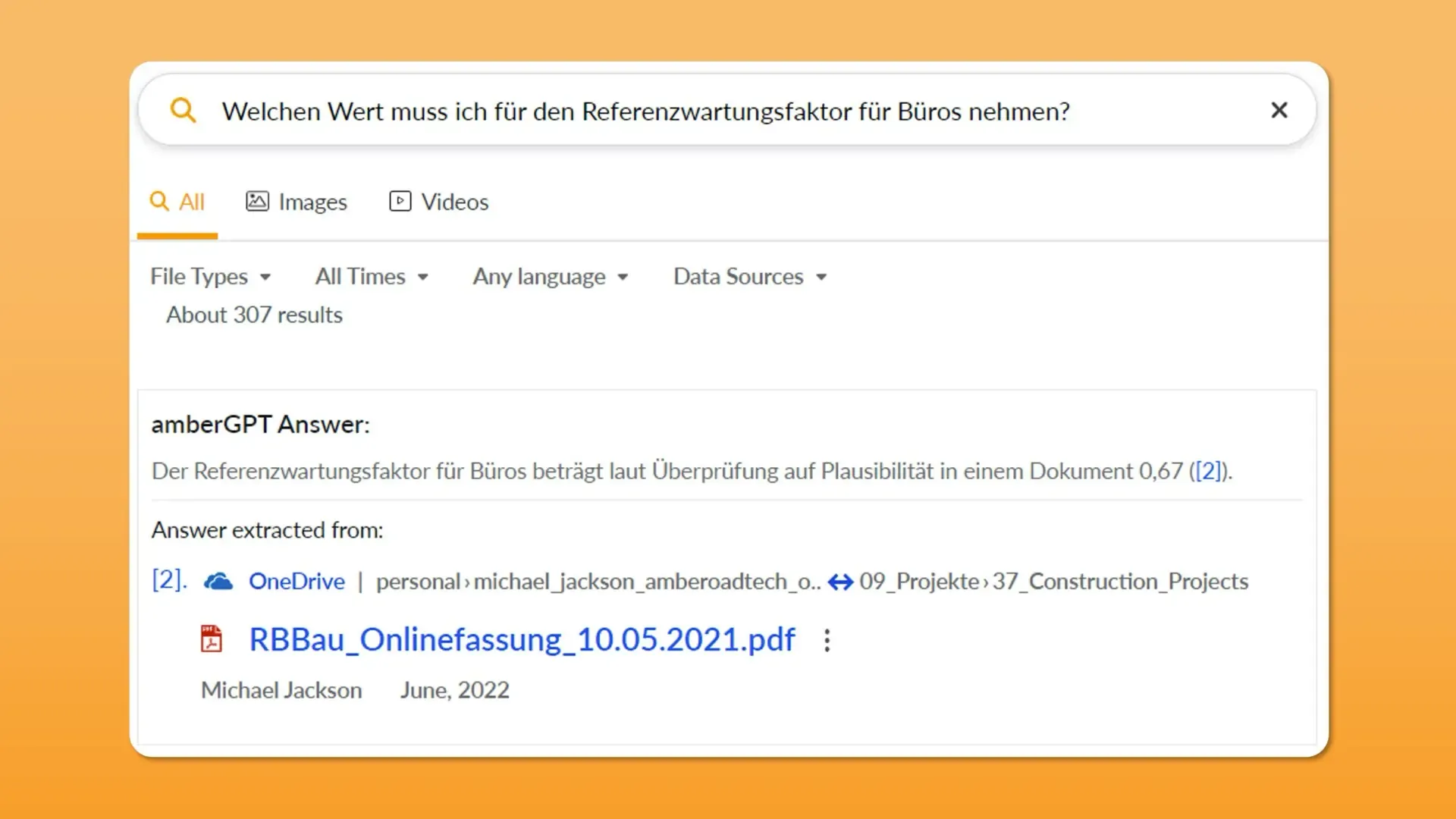
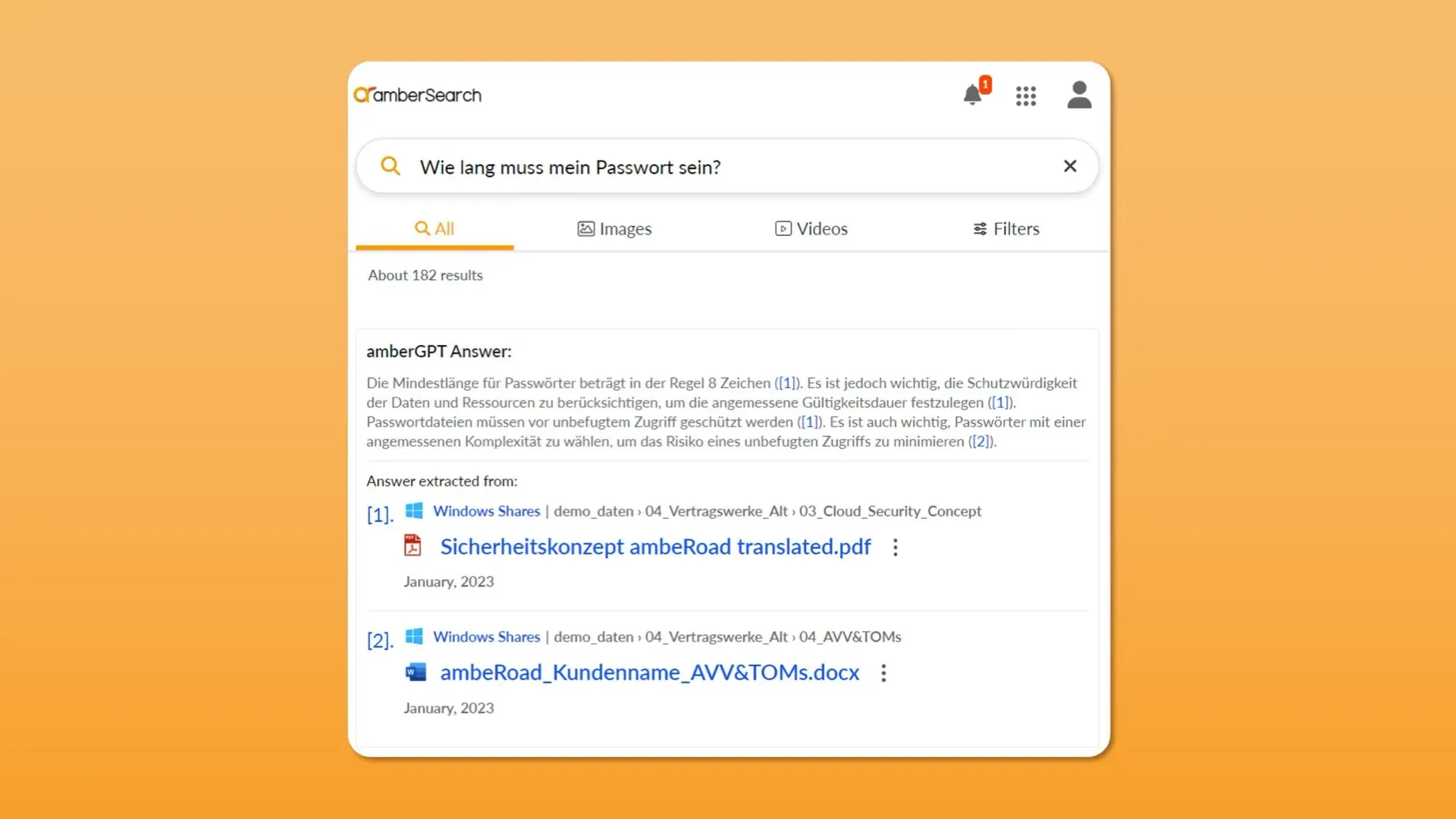
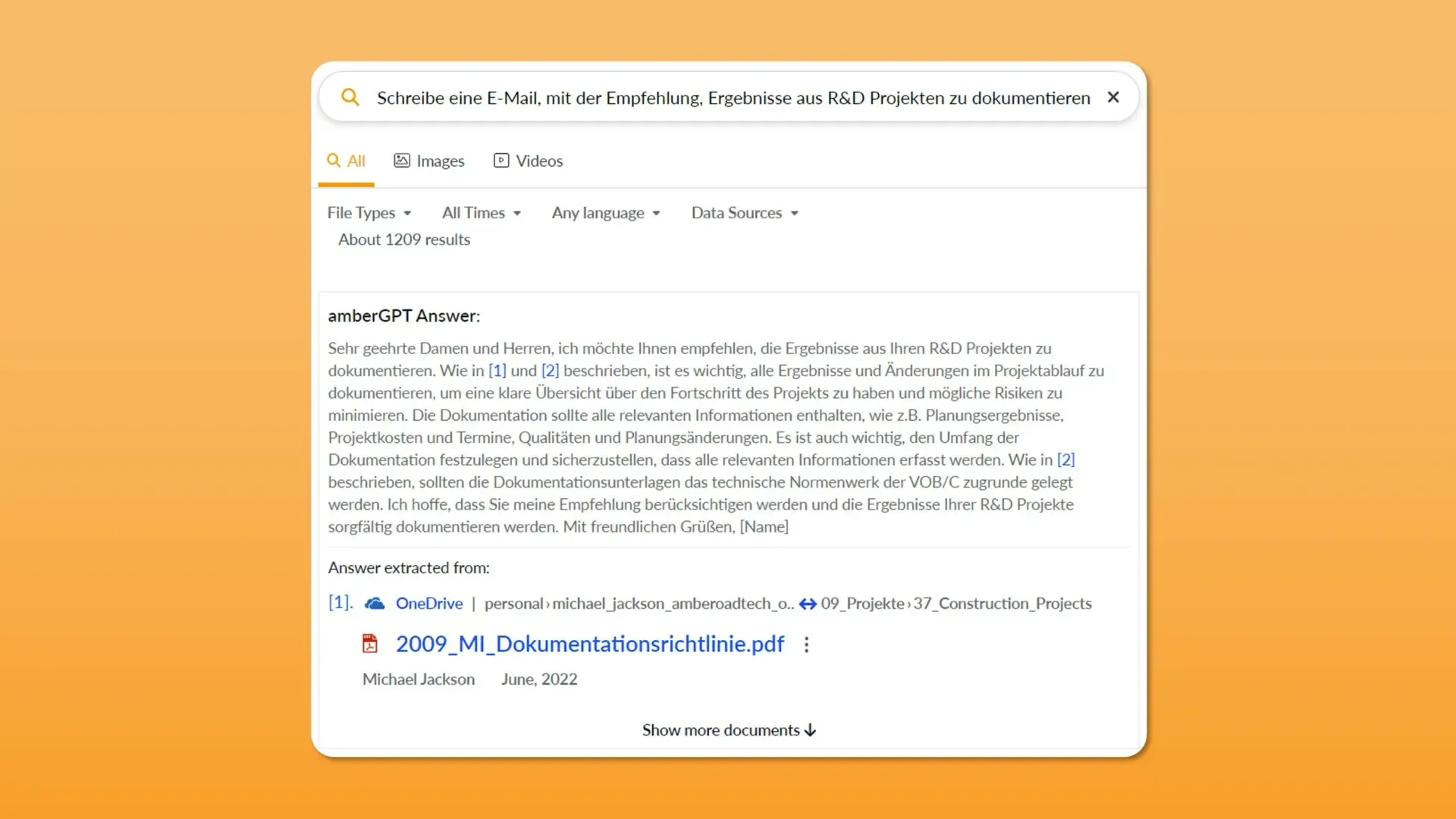
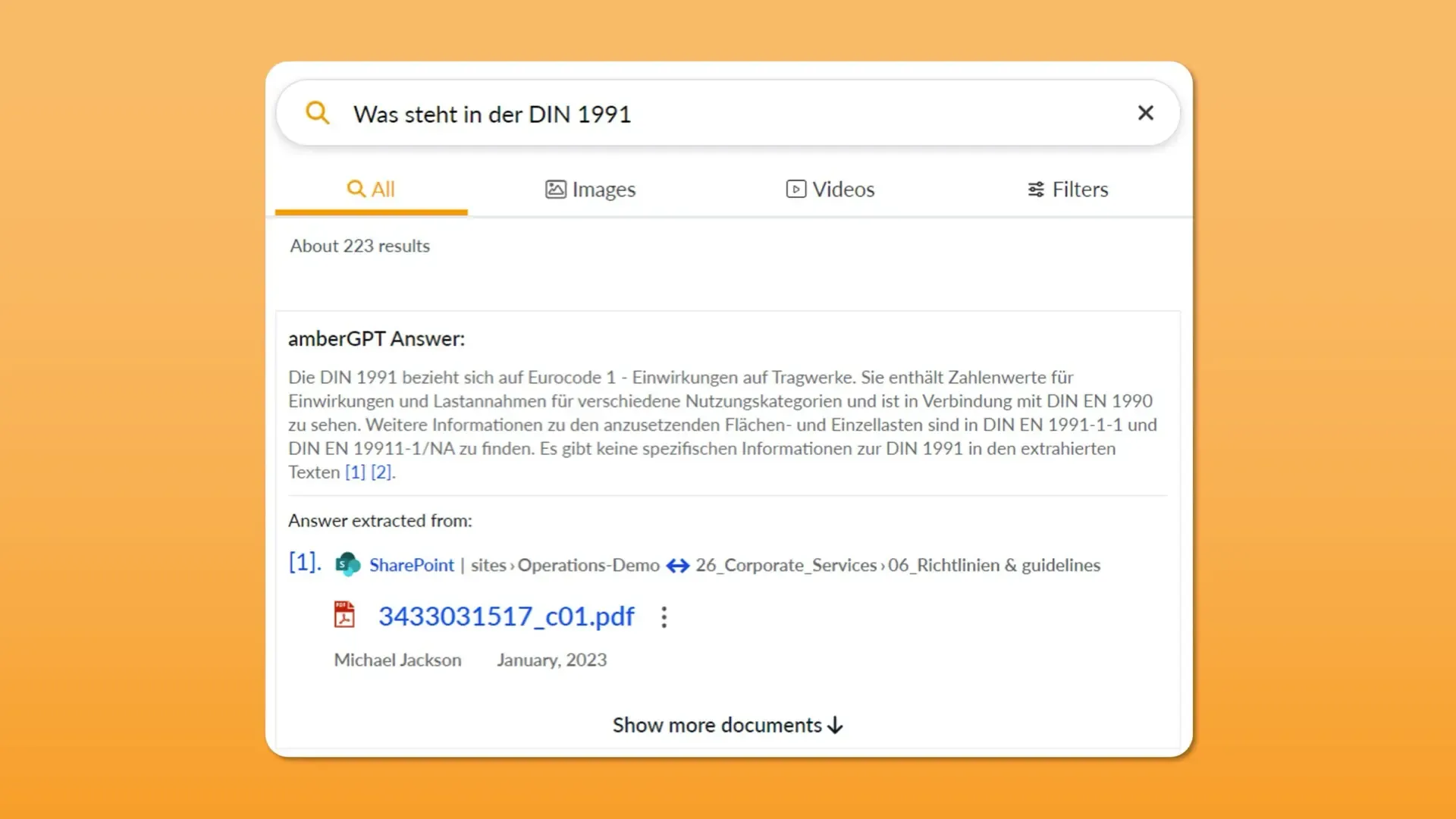
amber’s quality is based to a large extent on artificial intelligence, including natural language processing and machine learning. In addition, we have developed a new function – amberGPT – and also use the technology that ChatGPT uses. This enables us – taking into account our customers’ internal know-how – to create answers with specific know-how. In addition, we can combine information from different documents.
Typical applications of amberGPT include:
- summarizing projects
- finding the results of specific experiments
- obtaining information on specific standards
Conclusion
With a smart, cross-system information management solution, frustration, wasted time or even reworking information no longer have to be part of everyday work. With amber, there is a provider who offers a tailor-made solution for medium-sized companies to quickly and efficiently access internal information.
Frequently asked questions about digital transformation in R&D
What challenges do R&D departments face in the digital transformation?
Mainly two: making decentralised knowledge accessible to all employees, preferably without introducing a new data silo, and learning from past experiments even when the information comes from different documents.
Why are data silos a problem in R&D?
Employees often don't know where or what to look for and who to ask. A lot of time goes into internal research and asking around, and in R&D lessons already learned are overlooked, so mistakes or experiments are repeated.
How much time do employees lose searching for internal information?
According to amber's clients, 25 to 30 minutes per employee per day. That adds up to almost 3 working weeks per year used only for internal research.
How can data silos be broken up without replacing systems?
With a higher-level layer that gives employees one central point from which they can search all systems. This increases employee satisfaction and can reduce search time by up to 40%.
How can AI be used in R&D?
With amberGPT, answers can be created from a company's internal know-how and information from different documents can be combined, for example to summarize projects, find the results of specific experiments or obtain information on specific standards.