
Enterprise Search
AI for companies: the 8 best AI tools in 2027
Eight AI tools for business, each solving one specific task: from internal knowledge and meetings to content, finance, IT and translation.
AI for companies means software that uses artificial intelligence (AI) to take over or speed up specific work steps: finding internal knowledge, summarizing meetings, processing invoices, importing data or resolving IT tickets. Unlike consumer chatbots, AI tools for business have to fit into existing IT environments, respect access rights and meet GDPR requirements.
The use of artificial intelligence in companies is growing fast, and it is getting harder to see which tools are worth the effort. To help companies make the right choice, we have compiled eight AI tools for business. This is not a list of AI companies to watch, but of tools that can be used in daily work. For each tool, you see the problem it solves and the benefit the provider states. If you need a broader foundation that connects several AI use cases with your company knowledge, read our comparison of the best AI platforms for companies.
What is an AI tool?
An AI tool is software based on artificial intelligence that has been developed to perform tasks automatically, more efficiently and often with a high degree of precision. Such tools use AI to analyze text, images or numbers, based on technologies such as machine learning, natural language processing or image recognition. They are designed to help teams analyze data, optimize processes or support decision making. From AI-powered assistants that answer questions in natural language to tools that perform complex data analysis, AI tools help companies to save time, reduce costs and gain a competitive edge.
The difference from a general chatbot: a good AI tool for business is designed to solve one clearly defined task and works with your company data rather than with generic web knowledge. Generative AI is often part of it, but the value comes from the connection to your processes.
How companies use AI today
Most companies do not start with one big AI project. They use AI to take over repetitive work first, or to cut the time employees lose searching. This is where AI for business pays off fastest, for IT and business teams alike. These are the typical areas, each with an example from this list:
| Area | What the AI does | Example |
|---|---|---|
| Knowledge and search | Finds internal information across systems and answers questions with sources | amber |
| Meetings | Records, transcribes and summarizes calls | tl;dv |
| Marketing and content creation | Creates copy and images in your brand voice | neuroflash |
| Finance and procurement | Uses AI agents for invoices, accounting and tax steps | Nooxit |
| Data import | Maps customer data from CSV or Excel files to your structure | Ingestro |
| Sales and customer advice | Advises online shop customers in real time | homie AI (formerly yourhomie.ai) |
| IT operations | Resolves recurring IT tickets automatically | cloudsupplies |
| Translation | Translates and edits content for international markets | DeepL |
Knowledge and search
- What the AI does
- Finds internal information across systems and answers questions with sources
- Example
- amber
Meetings
- What the AI does
- Records, transcribes and summarizes calls
- Example
- tl;dv
Marketing and content creation
- What the AI does
- Creates copy and images in your brand voice
- Example
- neuroflash
Finance and procurement
- What the AI does
- Uses AI agents for invoices, accounting and tax steps
- Example
- Nooxit
Data import
- What the AI does
- Maps customer data from CSV or Excel files to your structure
- Example
- Ingestro
Sales and customer advice
- What the AI does
- Advises online shop customers in real time
- Example
- homie AI (formerly yourhomie.ai)
IT operations
- What the AI does
- Resolves recurring IT tickets automatically
- Example
- cloudsupplies
Translation
- What the AI does
- Translates and edits content for international markets
- Example
- DeepL
The best AI tools for business
1. amber
amber: Do your employees know what your company knows?
- The challenge
- More and more data sources, ever faster growing data volumes and demographic change make it increasingly difficult for employees to find internal knowledge quickly. As a result, valuable knowledge often remains unused in decision making because it is either unknown or employees spend a lot of time asking questions and searching internally.
- The solution
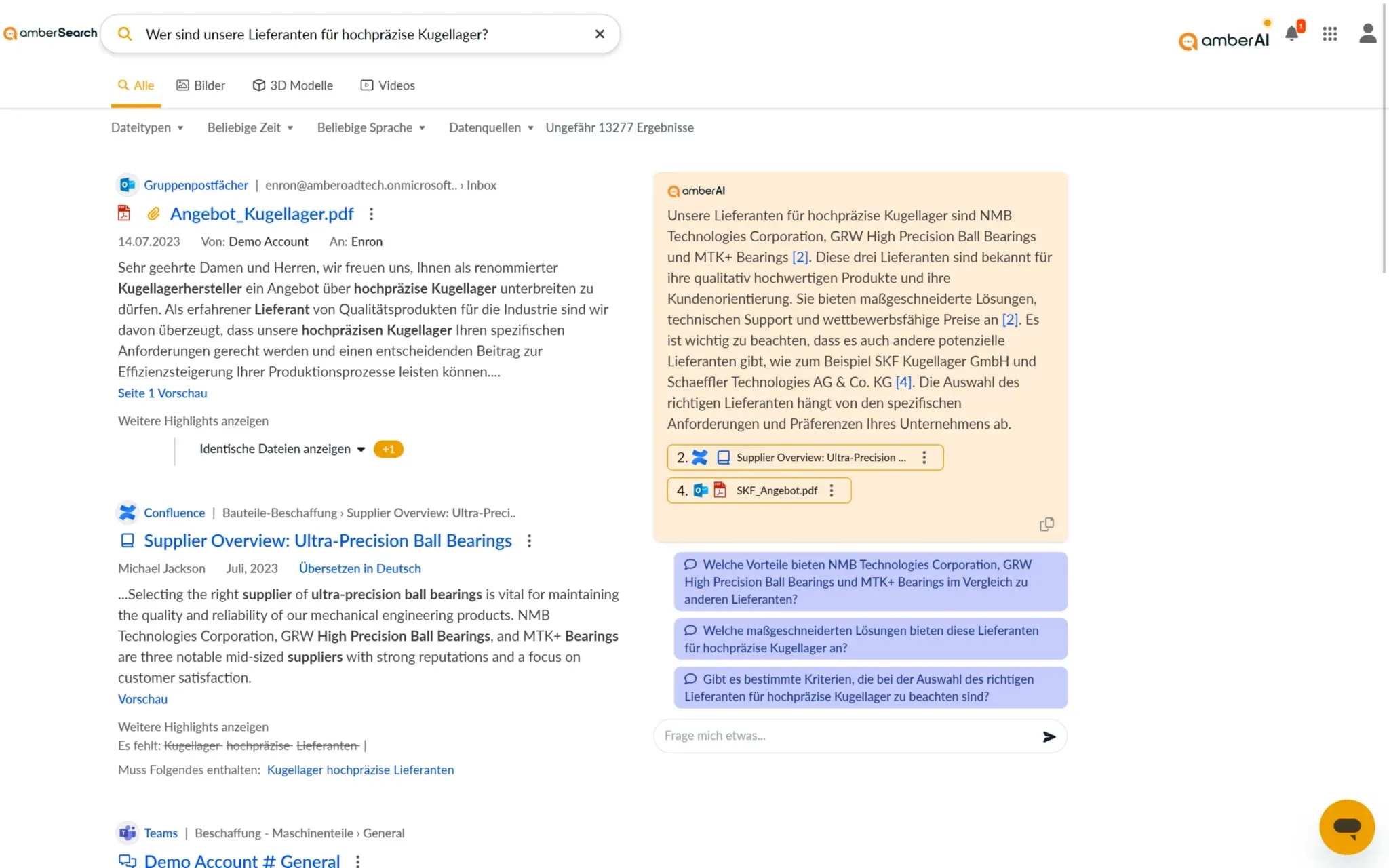
- Aachen-based amber brings company knowledge from more than 70 data sources together in one business AI platform. The platform started in the category enterprise search and today combines four products: a search across all sources, amberAI (a chat that works as a kind of company GPT and answers questions in natural language, backed by your own company knowledge), amberAgents (agents that automate recurring work steps without programming) and amberProjects (a shared space for team, knowledge and AI). Content from drives, Microsoft 365, document management systems, intranets and many other systems is found in compliance with the GDPR, and existing access rights apply from day one. Hosting and processing take place in Germany and Europe, and amber is ISO 27001-certified. You choose the AI models per task rather than being tied to one provider, and amber uses AI to connect knowledge management and daily work in one place.
- The advantages
- Thanks to a lean and standardized architecture, companies can use generative AI without setting up large projects first. Data does not need to be migrated or copied. Employees spend less time searching for information and are free to focus on value-adding tasks, which boosts efficiency and reduces frustration. At the same time, clear access to information prevents redundant work and keeps workflows running smoothly.
- In practice
- Many companies start with amber's search as an AI tool to improve employees' access to internal knowledge. In a next step, they use the same knowledge base for automated workflows: amberAgents automate recurring work steps, and more than 1,000 actions can be executed in connected systems with approval control. Other customers use amber's interfaces to provide their own AI workflows with contextual company knowledge so that tasks are solved better.
2. tl;dv
tl;dv: How can AI-powered notes improve your online meetings?
- The challenge
- More and more meetings are held digitally, often back to back. This leads to a flood of information, and every appointment has to be documented in meeting notes, which takes a lot of effort. At the same time, important details get lost or are not used effectively, which hurts productivity and decision making.
- The solution
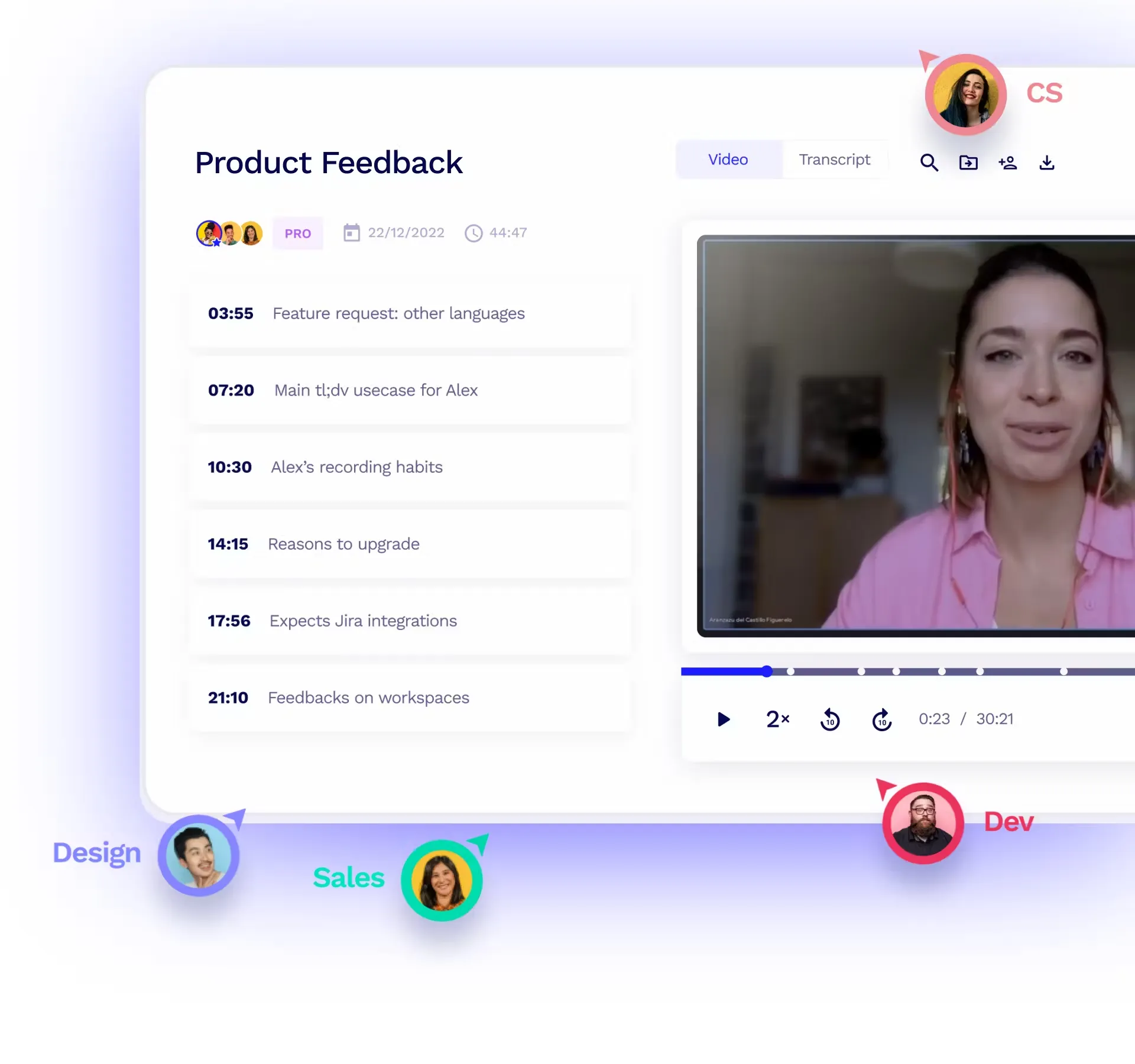
- tl;dv (short for "too long; didn't view") is an AI-powered note-taking assistant for meetings. The tool records meetings, transcribes them and uses artificial intelligence to create summaries. tl;dv works with Zoom, Google Meet and Microsoft Teams and supports more than 30 languages.
- The advantages
- Employees no longer need to take notes manually and can focus on the conversation. The AI-powered summaries make it possible to capture the most important points quickly and derive action items. CRM integrations log call notes and outcomes automatically, which reduces manual data entry in meeting follow-up. tl;dv also lets you use AI to analyze meetings, which is particularly useful for sales and onboarding teams. According to the provider, tl;dv is GDPR-compliant, and recordings are hosted and stored in the EU.
3. neuroflash
neuroflash: How do you speed up your content creation with AI?
- The challenge
- Generative AI makes it ever easier to create content. To remain visible, companies need to publish faster and more often without sacrificing quality. At the same time, marketing teams are under high competitive pressure and have too few resources. This often leads to delays and inconsistent messages.
- The solution
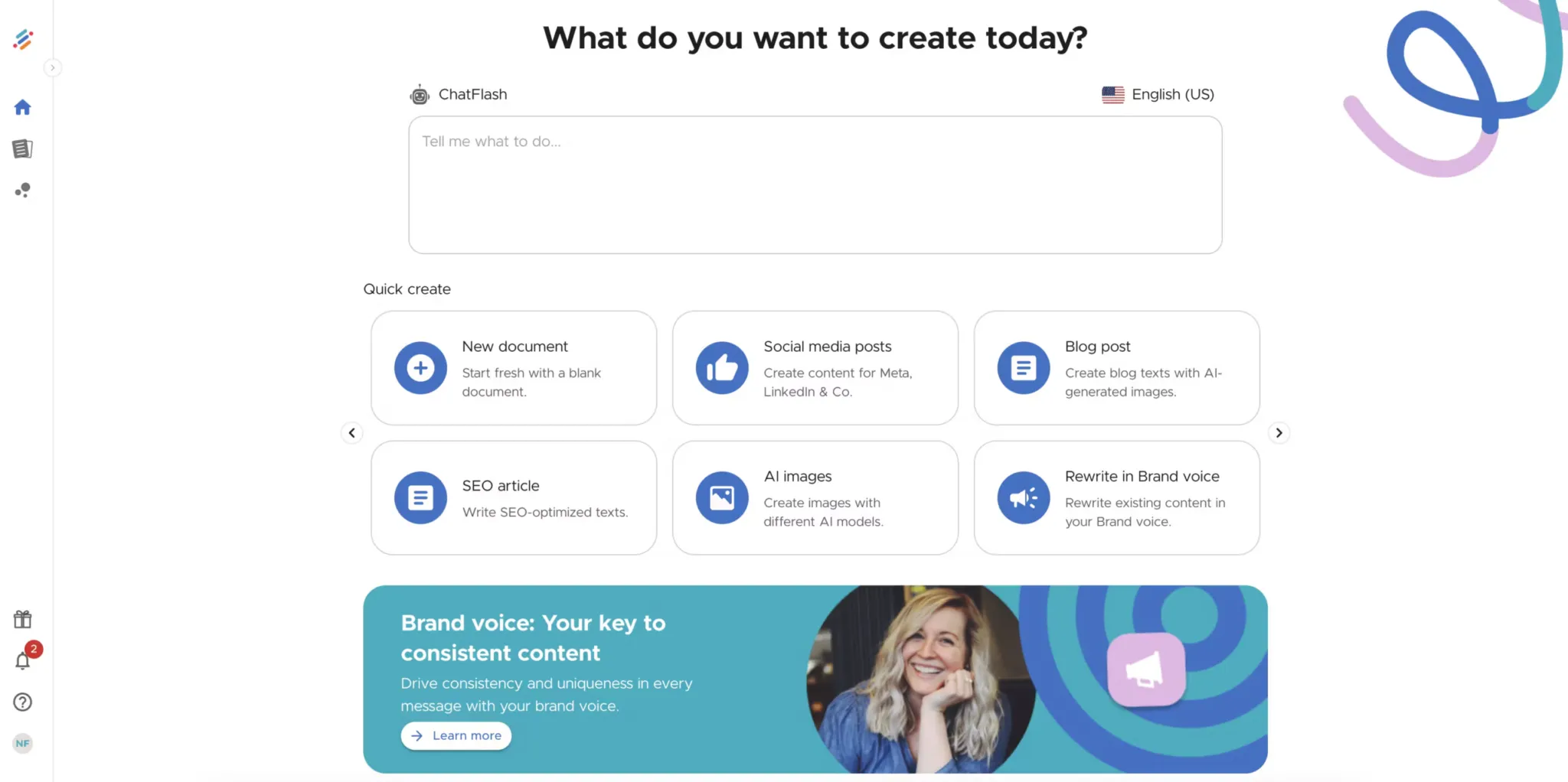
- German company neuroflash has built an AI-powered platform that helps companies and content creators to produce content quickly. The platform offers more than 100 ready-made workflows and supports more than 20 languages. Besides text generation, it includes SEO functions, image generation and AI-driven target audience feedback based on digital twins.
- The advantages
- With neuroflash, companies can speed up their content creation and keep quality consistent. The integrated SEO functionality supports visibility in search engines, while AI-powered image generation helps with visual design. The Brand Voice feature is particularly valuable because it keeps the tone of your brand consistent across channels. According to the provider, data is stored on servers in Germany and processed in compliance with the GDPR.
4. Nooxit
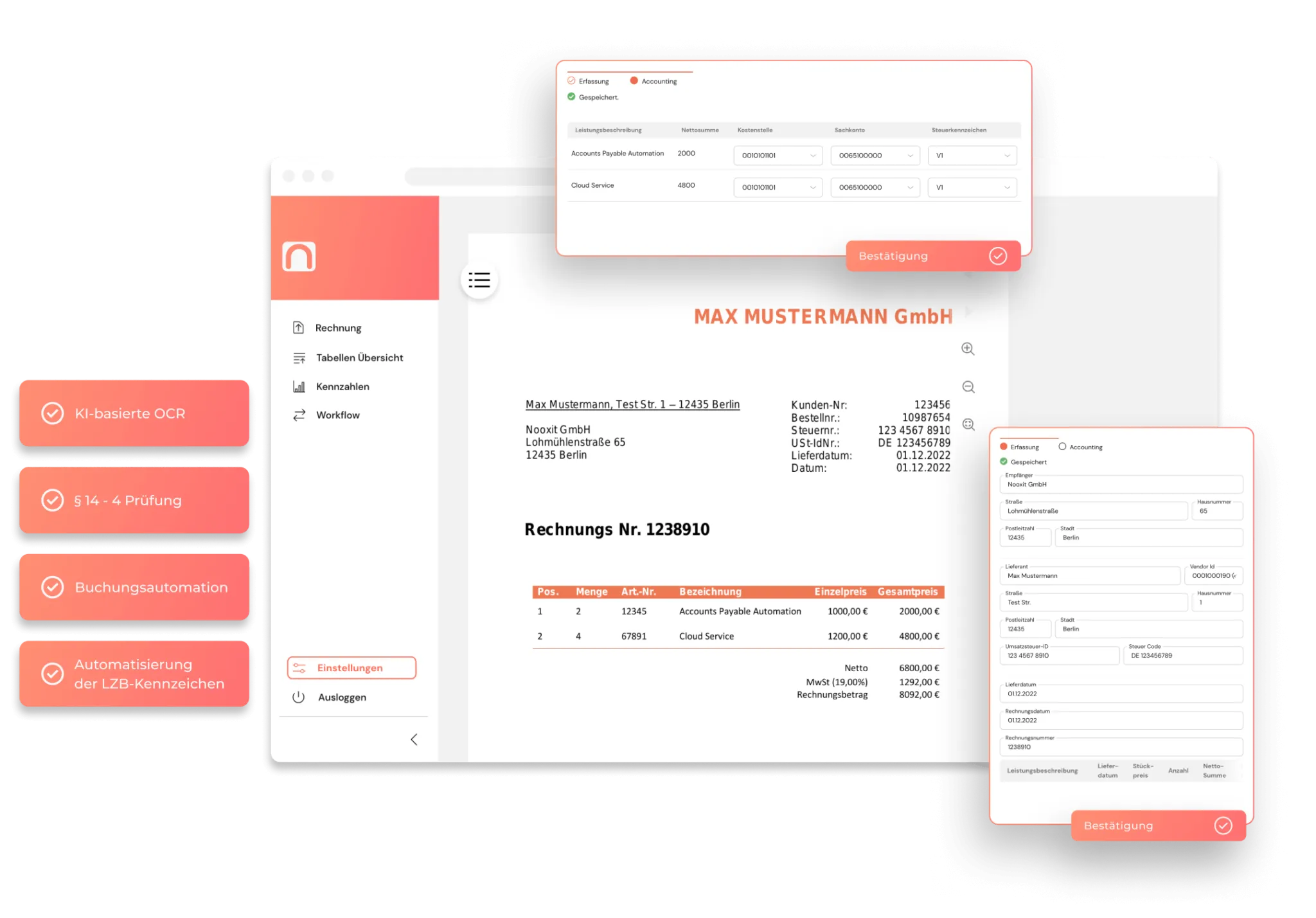
Nooxit: How do you automate your accounts payable processes with AI?
- The challenge
- In many companies, accounts payable processes are still time-consuming and prone to errors. Manual data entry, visual checks and the allocation of invoices to the correct accounts tie up valuable resources. This leads to high costs per invoice and more errors, which reduces the efficiency of the entire finance function.
- The solution
- Nooxit has developed an AI-driven platform for source-to-pay processes that uses artificial intelligence to automate financial and accounting steps. Specialized AI agents for procurement, customs, accounting and tax handle transactions end to end, for example by determining the correct VAT code at line-item level in SAP. The platform connects to existing ERP systems such as SAP and Oracle.
- The advantages
- According to the provider, companies achieve a 95% reduction in process costs. Employees are freed from tedious routine tasks and are able to focus on value-adding activities. Each step is documented in an audit trail, which helps with tax and compliance requirements.
5. Ingestro
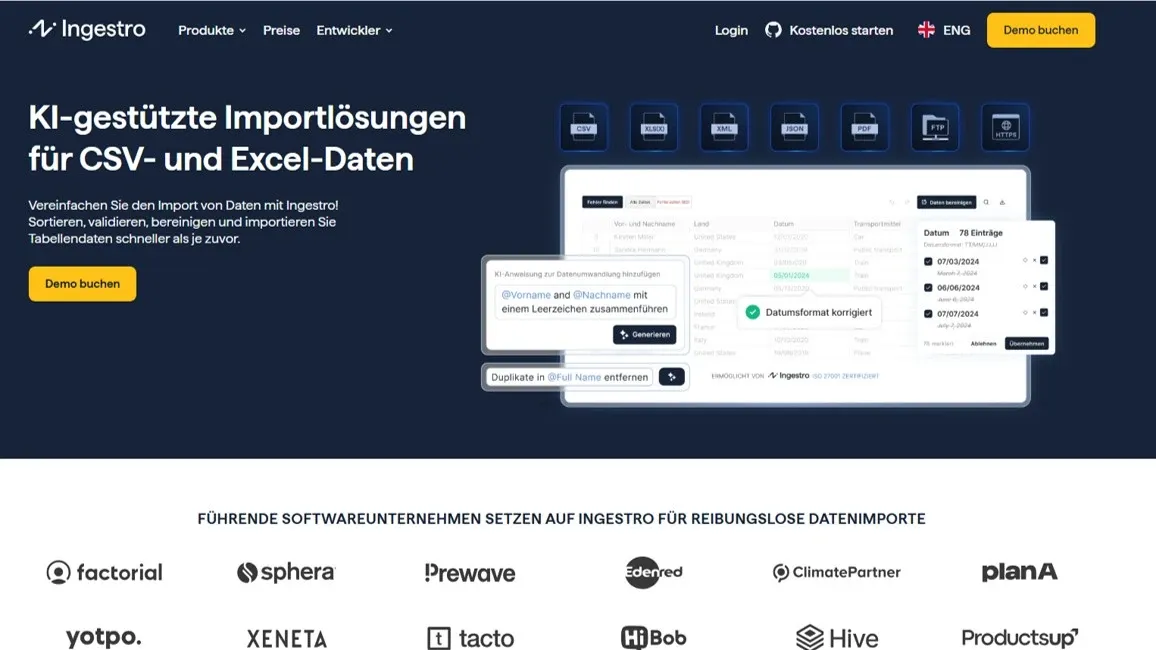
Ingestro: How do you import data quickly and easily?
- The challenge
- Many companies work with more and more data and have to import it into a wide range of tools. When importing file types such as CSV, Excel and JSON, they need to map this data correctly so that the tools can process it. These steps tie up developer resources and frustrate customers with lengthy import cycles.
- The solution
- Hamburg-based Ingestro has developed an AI-powered solution that simplifies the import of external data for software companies. With the Ingestro Data Importer and automated data pipelines, companies can accept customer data and bring it into the right structure. Ingestro uses AI to map and transform data into the desired format.
- The advantages
- With Ingestro, companies can focus their developer resources on their core product rather than building custom import scripts. The AI handles complex mapping cases automatically, which saves time. Customers benefit from a faster onboarding process, which increases satisfaction and can support sales.
6. homie AI (formerly yourhomie.ai)
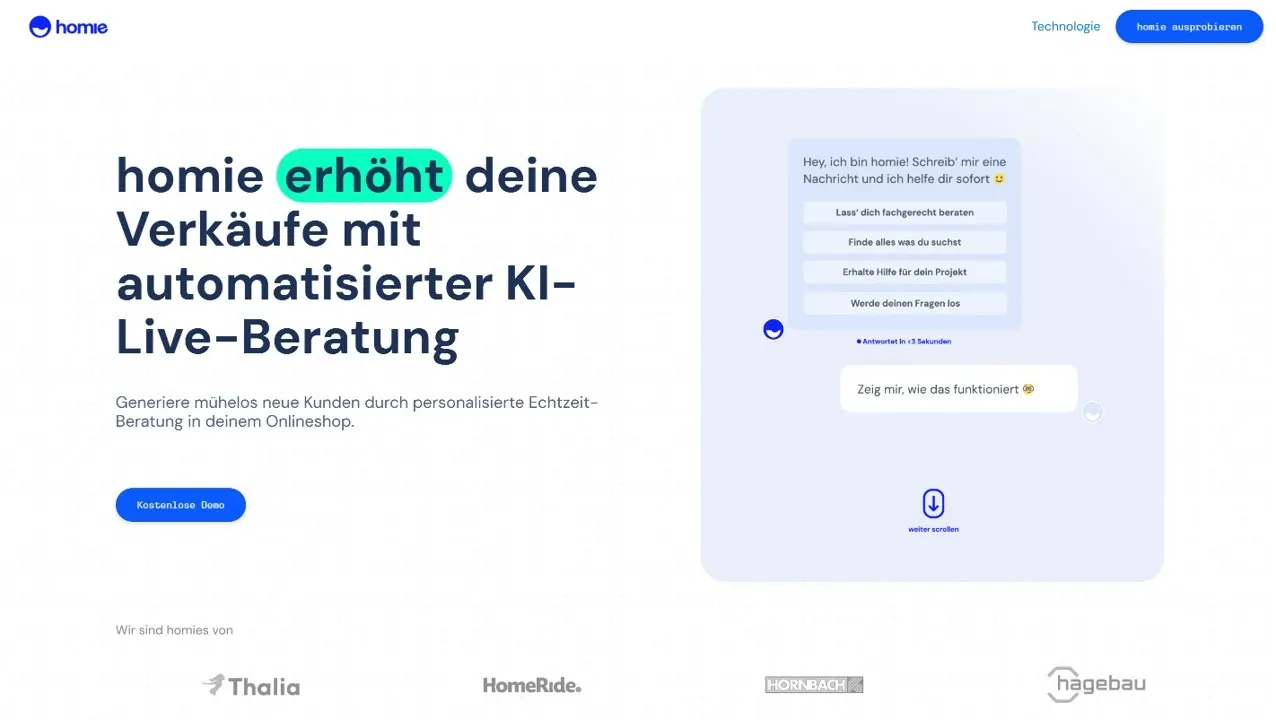
homie AI: How do you turn customer inquiries into targeted consultations?
- The challenge
- Companies are faced with an increasing number of customer inquiries but cannot expand resources quickly without losing quality. At the same time, the need for personalized advice is growing. Traditional customer service often reaches its limits, which leads to longer waiting times and missed sales opportunities. With large product ranges in particular, it is difficult for human advisors to provide precise information on all items at all times.
- The solution
- homie AI has developed an AI-driven solution that acts as a digital sales consultant in online shops. The AI assistant uses artificial intelligence to answer customer questions in real time, makes personalized recommendations and guides customers through the purchasing process. According to the provider, it connects to shop systems such as Shopify and Shopware without code.
- The advantages
- According to the provider, online shops achieve a 30% conversion uplift, up to 80% more consultations and up to 25% fewer support tickets during peak times. Your customer service team gains time for complex cases, while routine questions are answered immediately.
7. cloudsupplies
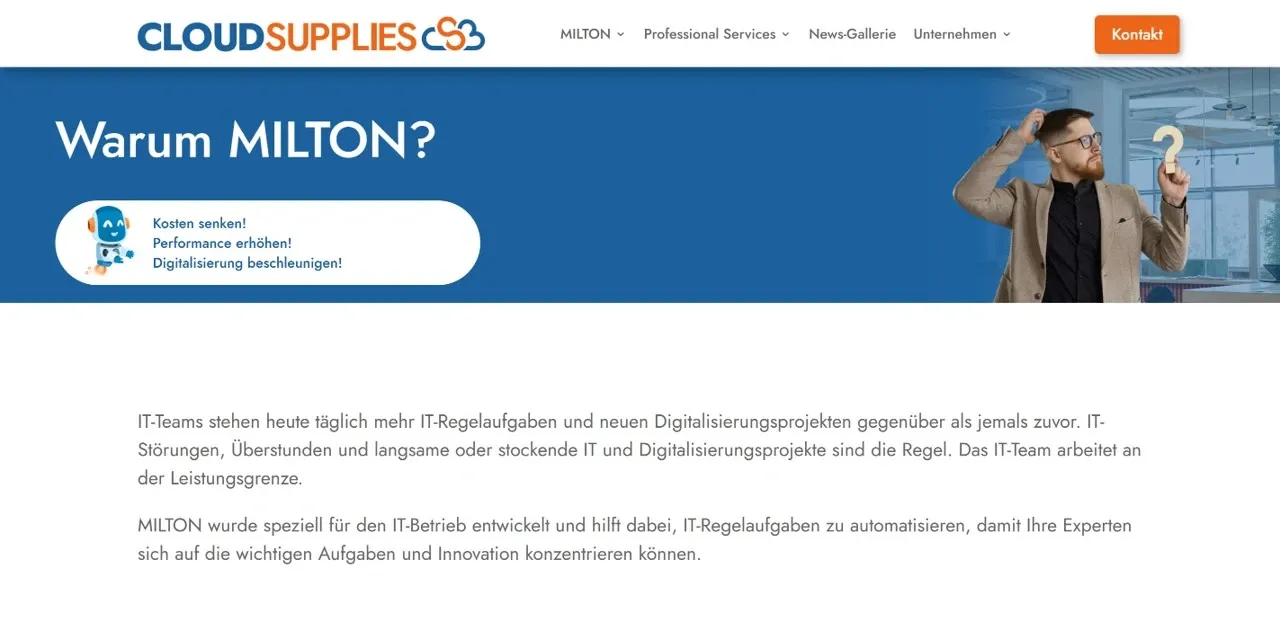
cloudsupplies: Free your IT teams from routine tasks
- The challenge
- The complexity of companies' IT environments keeps increasing while the number of IT specialists is decreasing. Valuable IT resources are tied up in routine tasks that are time-consuming and contribute little to strategic development. IT teams have less time for new projects, which affects the efficiency and competitiveness of the company.
- The solution
- Hamburg-based cloudsupplies wants to free IT teams from time-consuming routine tasks. Its AI-driven automation solution MILTON combines IT service monitoring and artificial intelligence to automate repetitive tasks in IT operations. MILTON reads incoming tickets in real time, recognizes tasks such as creating new users in the Active Directory or processing IT tickets and executes them, taking into account the specific requirements of the company. It runs in the cloud, on-premises or in hybrid environments.
- The advantages
- According to the provider, MILTON achieves 95% automation of IT routine tasks, 20% fewer IT disruptions, 75% less effort in ticket processing and four times faster resolution of IT tickets. IT teams can focus on strategic tasks, which increases productivity and satisfaction within the teams.
8. DeepL
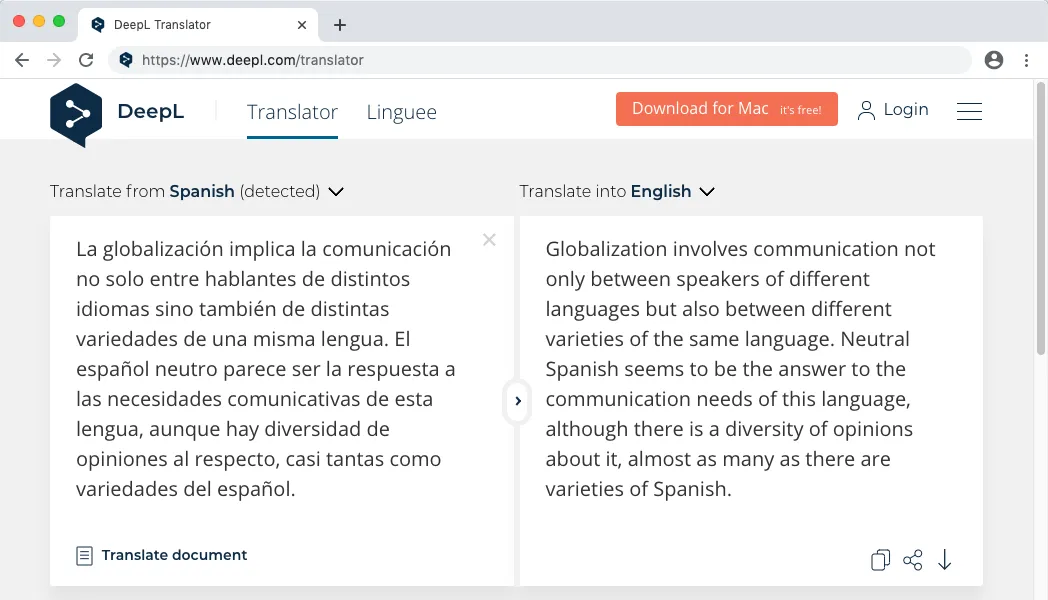
DeepL: How do you translate your content quickly for international communication?
- The challenge
- Generative AI now creates an enormous amount of content in a very short time. Teams need to respond to international markets faster without losing precision or tone. At the same time, marketing and communications teams work under time pressure with limited resources, which leads to delays and quality differences.
- The solution
- DeepL offers an AI-powered platform for translation and text processing that enables companies to create accurate and consistent multilingual content. With translations into over 100 languages, real-time voice translation, the writing assistant DeepL Write, tone control and custom glossaries, the platform supports the localization of texts for different channels. Existing content can be transferred into other languages and adapted stylistically to target markets.
- The advantages
- With DeepL, companies can speed up their multilingual content creation while improving linguistic quality. Teams save time on translation and proofreading and gain capacity for creative and strategic tasks. Custom glossaries keep terminology consistent across languages.
Advantages of using AI tools for business
With the right selection of AI tools, organizations reduce costs and increase their capacity for innovation.
Potential challenges of AI tools
Despite the numerous benefits, AI tools also bring challenges that companies should be aware of.
Companies should therefore develop a clear strategy and careful planning before introducing AI tools.
How to choose the best AI tools for your company
Choosing the right AI tools for an organization requires a careful analysis of specific needs and goals.
- 01
Step 1
Areas of application
First, identify the areas where AI can add the most value, for example process automation, knowledge management, data analysis or customer interaction.
- 02
Step 2
Functionalities
Next, compare different tools based on their functionalities, user-friendliness and compatibility with existing systems.
- 03
Step 3
Integration
Check whether the tool connects to the systems your teams already use and how much effort it takes to bring your data to the tool. AI solutions that can reuse existing access rights save a second rights management.
- 04
Step 4
Scalability
The solution should keep pace with the company's growing needs.
- 05
Step 5
Data protection and security
Check data protection and security standards, hosting location and certifications to ensure that the tool complies with legal requirements.
- 06
Step 6
Support and updates
Last but not least, the provider should offer reliable support and regular updates.
A structured selection process, accompanied by pilot projects and feedback from employees, helps to implement the best AI tools for lasting success. To support you, we have put together a checklist for the introduction of AI and a best-practice guide for a structured selection process.
AI tool or AI platform?
By the way, an AI tool is ready-made software for a specific task that you can use right away. A platform goes further.
AI tool
- Ready-made software for a specific task
- You can use it right away
AI platform
- Provides interfaces and building blocks
- You use them to build your own AI solutions and workflows on your company data
- Aimed more at IT teams with their own implementation plan
If you are looking for a platform to build your own AI solutions on, you can find the comparison here: The best AI platforms for companies.
AI tools in the future
AI tools will have to evolve as the requirements of companies grow, to respond more closely to the needs of users while overcoming ethical, social and technical challenges. They will become more context-sensitive and interactive and solve more complex tasks autonomously. AI agents and multi-agent systems are a step in this direction, without replacing human control.
Important development goals include more transparency and traceability to reduce the "black box" problem, as well as data protection and fairness to prevent discrimination and abuse. At the same time, AI systems need to be designed sustainably, both in terms of their energy consumption and their social impact, to create long-term value for all stakeholders.
Now it’s your turn!
Have you tried amber yet? You can test it for 30 days free of charge, no credit card required: Try amber free for 30 days. If you want to see how amber works with your own systems first, book a demo.
Frequently asked questions about AI tools for business
How can AI be used in companies?
Companies use AI for many everyday tasks. They use AI to find internal knowledge, summarize meetings, create content, process invoices, import data, advise customers, resolve IT tickets and translate texts. The best starting point is a task that costs a lot of time today and relies on data you already have. Start with a pilot in one team and measure the time saved before you roll it out.
What is the best AI for companies?
There is no single best AI for every company, because AI can solve very different problems. It depends on the task: for meeting notes, a specialized tool like tl;dv is enough. For knowledge spread across many systems, you need a solution that connects your data sources and respects access rights, such as amber. Check integration, hosting, GDPR compliance and model flexibility before you decide.
What can AI tools do for businesses?
AI tools help businesses to automate repetitive tasks, analyze large amounts of data and documents, and answer questions in natural language. They help employees find information faster, reduce manual data entry and support decision making with better data. How much they deliver depends on how well they are connected to your existing systems.
Which AI tools can automate repetitive business tasks?
In this list, cloudsupplies automates recurring IT tasks, Nooxit uses AI agents for procurement, accounting and tax steps, and Ingestro automates data imports. amberAgents automate recurring work steps across connected systems without programming. For each process, check whether the AI is allowed to access the data it needs and who approves its actions.
Are AI tools safe for company data?
That depends on the provider. Check where data is hosted and processed, whether the provider holds certifications such as ISO 27001, whether your data is used to train AI models, and whether existing access rights are applied. Details are in our guide to GDPR-compliant business AI.
What is the difference between an AI tool and an AI agent?
An AI tool supports a person with a defined task, for example translating a text or summarizing a meeting. An AI agent works through several steps on its own: it collects information from different systems, prepares a result and triggers an action. Because agents act in your systems, they need clear rules and approvals.