
Guide
What is an AI agent? Definition and 3 everyday examples, explained simply
What an AI agent is, how it differs from an AI assistant and a chatbot, and how it takes planning, searching and coordinating off your plate in everyday life.

Definition: What is an AI agent?
AI agents are the next logical step in the development of artificial intelligence. But what sets them apart from a simple chatbot? A chatbot gives you an answer to a question. An AI agent can pursue a goal on its own. It plans, carries out the work and hands you a result.
Definition: An AI agent is an AI system that pursues a given goal on its own. To do so, it breaks the task down into smaller steps and uses tools and data sources until the result is ready.
This article gives you a basic understanding without the technical details.
If you want to use AI agents in your company (use cases, security, ROI, rollout), this practical guide is the right place to start:
AI agents for businesses: benefits, security, vendors and costs
The 3 key takeaways
AI agents explained simply: how an agent works
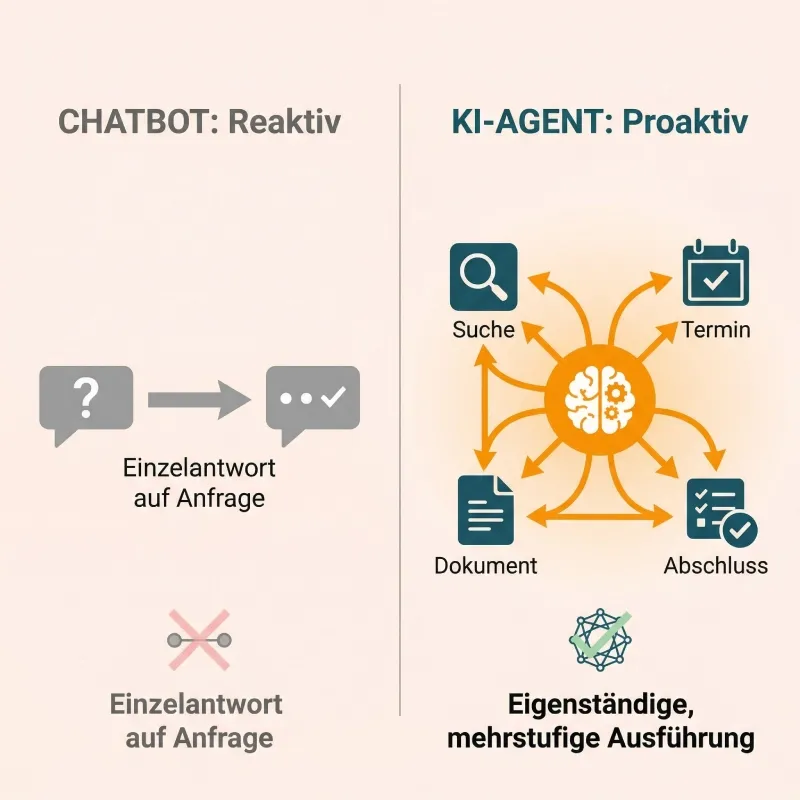
An AI agent is like a personal helper that receives a goal from you and works out the best way to reach it on its own. It uses various tools and data sources to do this, without you having to spell out every step.
Imagine you give it this task: “Find the best Italian restaurant nearby and book a table for two for tonight.”
A simple chatbot gives you a list of restaurants. An AI agent, on the other hand, gets the job done:
- 01
Step 1
Plan
It checks your location, analyzes restaurant reviews, checks opening hours and looks for an online booking system.
- 02
Step 2
Execute
It compares the options, checks availability for tonight and books the table for two.
- 03
Step 3
Report
You receive a confirmed booking. No searching, no booking, just the result.
AI agent vs. AI assistant vs. chatbot
A chatbot answers questions, one at a time. An AI assistant supports you with a specific task, such as drafting or summarizing text, and always waits for your next input. An AI agent receives a goal and works through the necessary steps on its own until there is a result. To learn how AI assistants work and which types exist, read our article What is an AI assistant?
3 everyday examples: how AI agents bring order to your life
The following three examples are deliberately taken from everyday life to make the principle tangible. For concrete scenarios from sales, customer service, HR or IT, see our overview of ten AI agent examples from business practice.
Everyday example 1: your personal travel agent
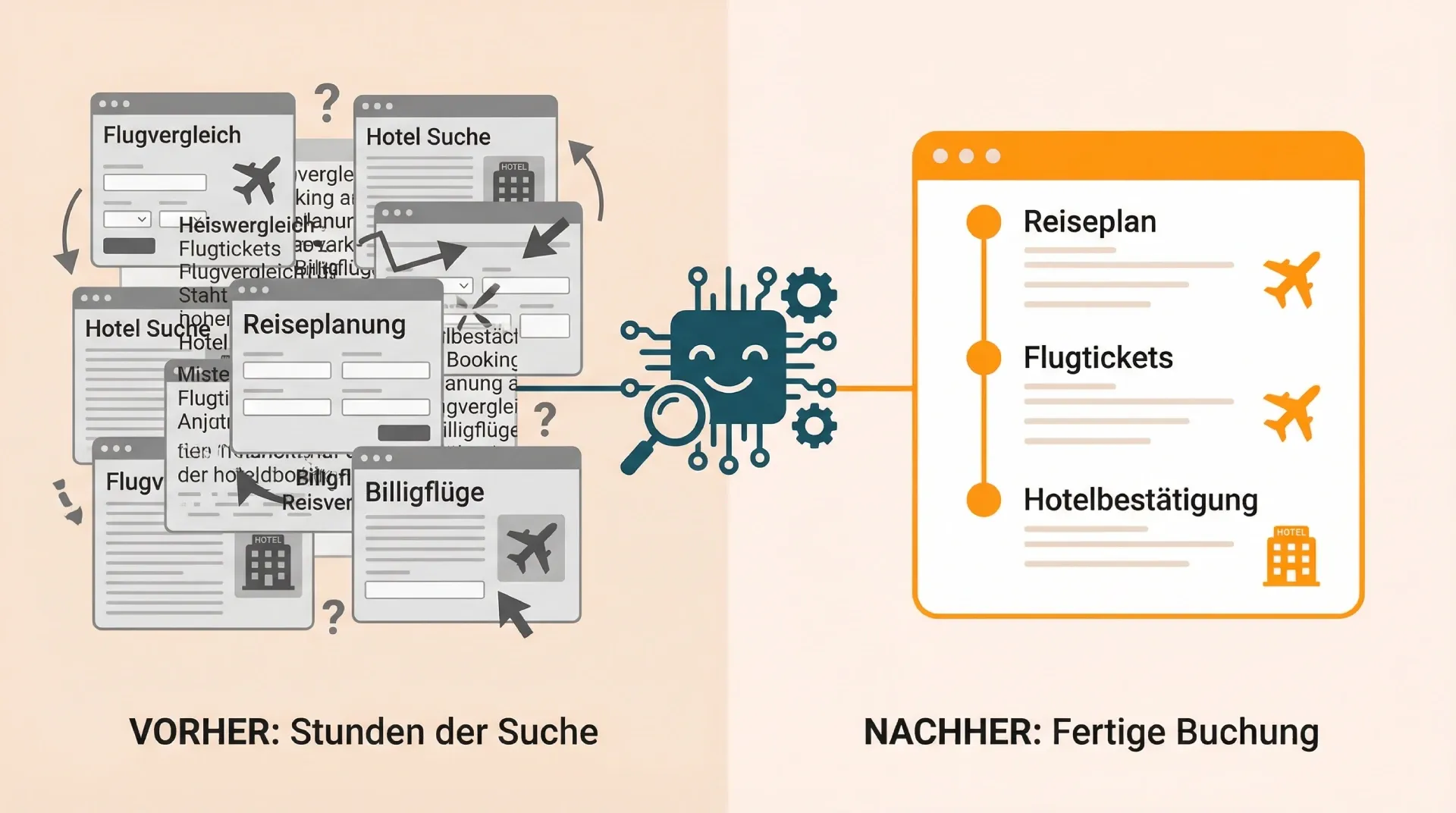
The problem: Planning a vacation is a full-time job of comparing, checking and booking.
The solution with an AI agent: You only state your goal, for example “Book me the cheapest possible vacation in Mallorca in August.”
What the agent does for you:
- Clarify the requirements: It asks you about your budget, the exact travel dates and your preferred departure airports.
- Research & analysis: It searches countless flight and hotel portals and saves you the manual search.
- Select the offer: It filters the results by the best reviews and the best value for money.
- Handle the booking: Once you approve, the agent books the flights and the hotel and sends you the confirmations.
Your result: You save hours and get the best offer without getting lost in the details.
Everyday example 2: your personal knowledge manager
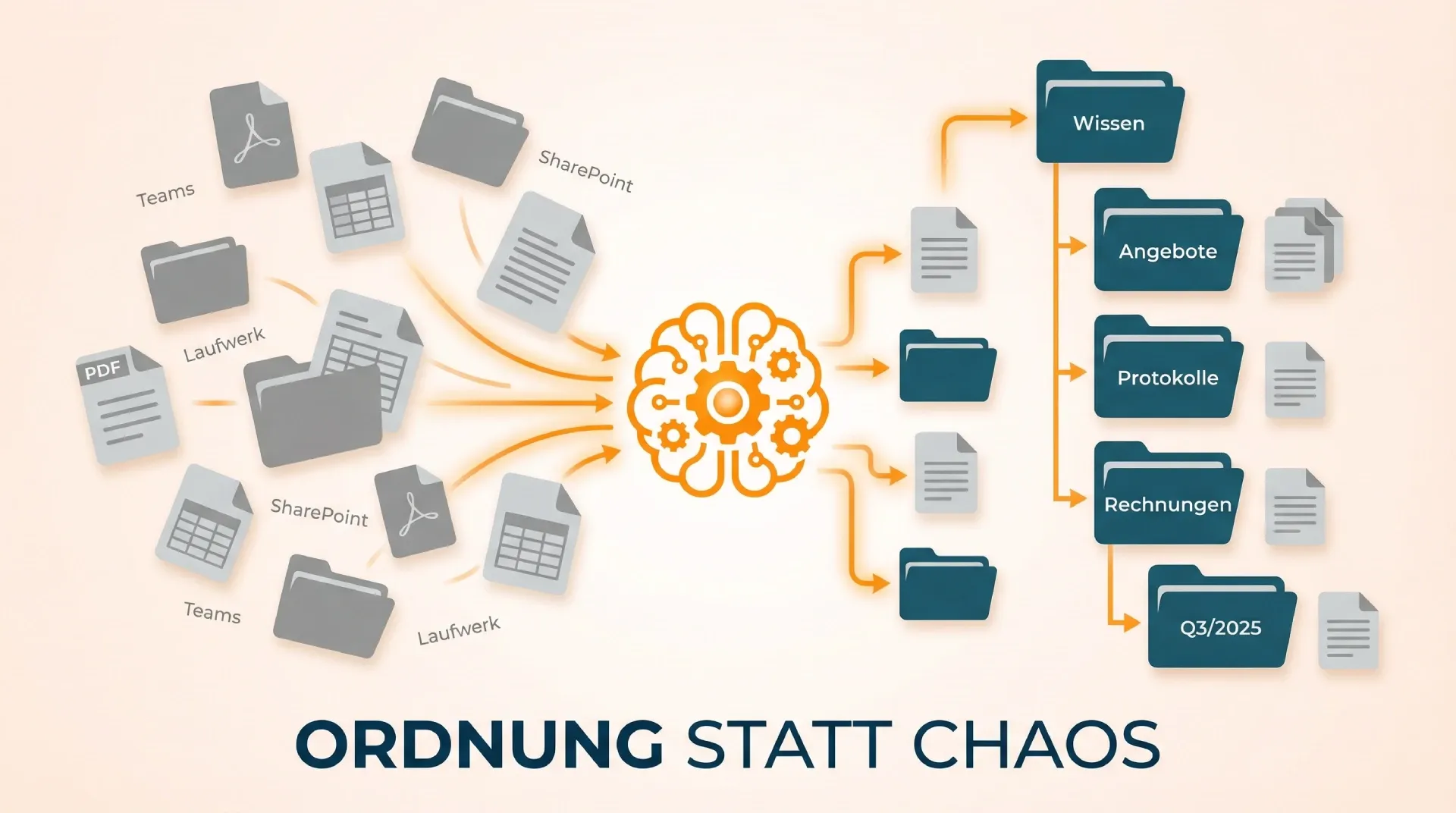
The problem: Your important files, such as quotes, minutes and invoices, are scattered across Teams, SharePoint and local drives.
The solution with an AI agent: You only state your goal, for example “Bring order to my digital chaos and make sure I can find everything again.”
What the agent does for you:
- Analysis: The agent scans all your files and identifies file types, projects and connections.
- Create a concept: It suggests a logical folder structure that fits the way you work (e.g., by customer, project or quarter).
- Classification: It analyzes the content of the files to assign them to the right folders (e.g., all invoices from Q3/2025 go into the folder “Finance/2025/Q3”).
- Move: Once you approve, the agent sorts all files into place automatically.
Your result: You finally have a system, find documents in seconds and regain control over your knowledge.
Everyday example 3: your meeting agent
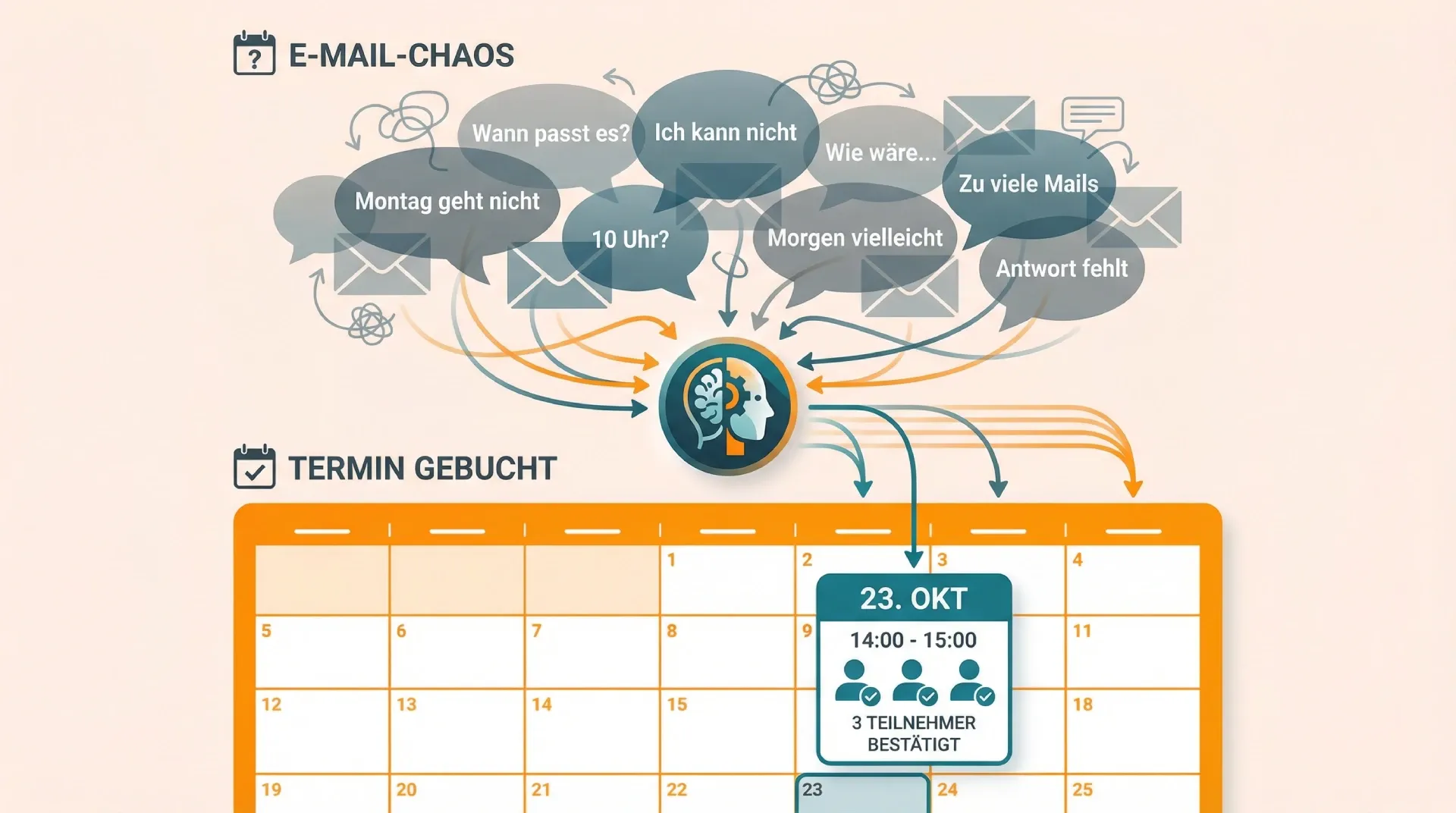
The problem: Coordinating meetings with several people is an endless back and forth of emails.
The solution with an AI agent: You only state your goal, for example “Organize a meeting with person A and person B next week on ‘Project X’.”
What the agent does for you:
- Calendar check: It accesses all participants’ calendars and automatically finds suitable time slots.
- Send proposed times: It sends a single email with 2 to 3 proposed times to everyone.
- Book the meeting: As soon as everyone has agreed, the agent books the meeting, reserves a room and sends out the final invitation.
Your result: You skip the entire back and forth and can focus on preparing the content of the meeting.
Conclusion: less coordination, more results

AI agents are more than “chat.” They help you actually reach your goals: plan, execute, deliver a result. In everyday life, that mainly means less coordinating, less searching and fewer small chores.
If you want to know how AI agents can be used in your company securely and profitably (including use cases, rollout and measurement), read on here:
The practical guide for decision-makers: introducing AI agents in your company securely
FAQ: Common questions about AI agents
What is the difference between a chatbot and an AI agent?
A chatbot mainly answers questions. An AI agent pursues a goal, breaks it down into steps and delivers a result at the end.
Do I need any technical knowledge?
Not necessarily. For many applications, it is enough to state a goal clearly. The technical complexity sits in the system behind it.
Can AI agents make mistakes?
Yes. That is why results should be traceable and you should give your approval for important steps.
What are AI agents particularly good for?
For recurring tasks that would otherwise take a lot of coordinating, searching or comparing, in other words wherever time disappears into “side work.”