
Guide
What are you waiting for – are you still searching or have you already started finding?
30 minutes a day – that's how much time employees spend on internal searches. But you can easily save 40% or more of this time. We'll show you how!

Every employee knows it. The frustrating search for information in the internal IT infrastructure. The thought: “There used to be something.” The intuition: “I think it's in SharePoint. Or was it the drive? Mhmm, maybe it was an attachment in an email. Not again. Then I'd better ask my colleague – he/she will surely know.” And then this person is faced with the same problem…
Do you recognise yourself? There are hundreds of similar search processes in the company. And it's simply frustrating. According to a survey we conducted in 2022, employees spend between 25 and 30 minutes a day searching for internal company information.
According to a study by Büro Kaizen, digital search time has also increased by 77% in the years leading up to 2022. This figure will continue to rise given the exponential growth in data volumes.
How much time do employees spend on internal company searches?
According to a study by SearchYourCloud, a third of employees spend between 5 and 25 minutes searching for information and only one in five searches finds the result on the first attempt. On average, employees need up to 8 searches to find the right information.
- per search for a third of employees
- 5–25 min
- searches finds the result on the first attempt
- 1 in 5
- searches on average to find the right information
- up to 8
These figures were motivation enough for us to carry out our own study in a company with 400 employees. These are the results of a selection of the questions:
How quickly were you able to purposefully find information in our company structure after your onboarding?
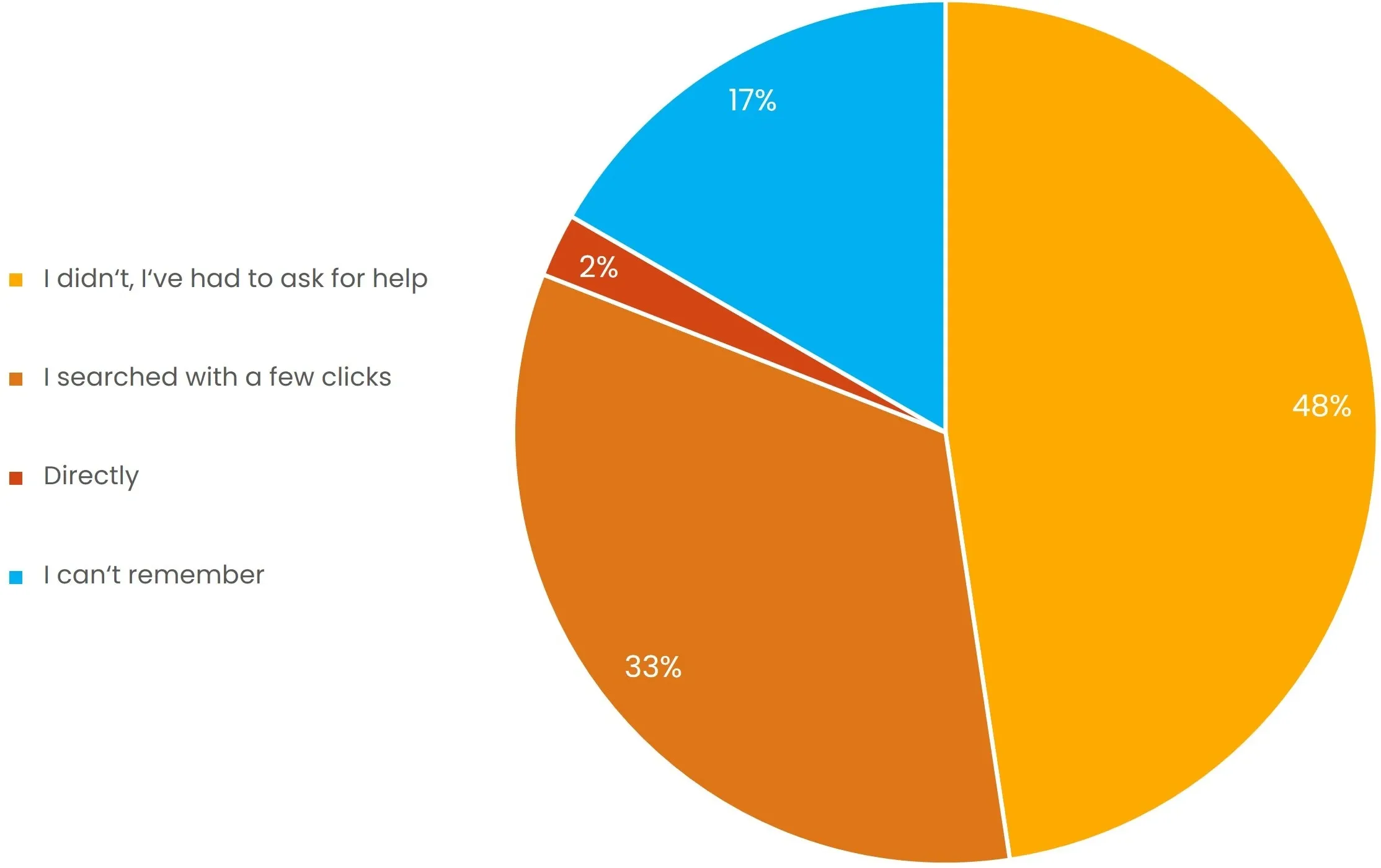
Finding: 48% of the employees surveyed were unable to find the correct information, but instead had to stop their colleagues from working and ask them for the correct information. Furthermore, only one person stated that they had found the information immediately.
Problem: Not only is your own working time wasted, but colleagues are also torn away from their tasks and distracted and then have to get back into their previous tasks.
How much time do you spend on average every day looking for information that is needed for work?
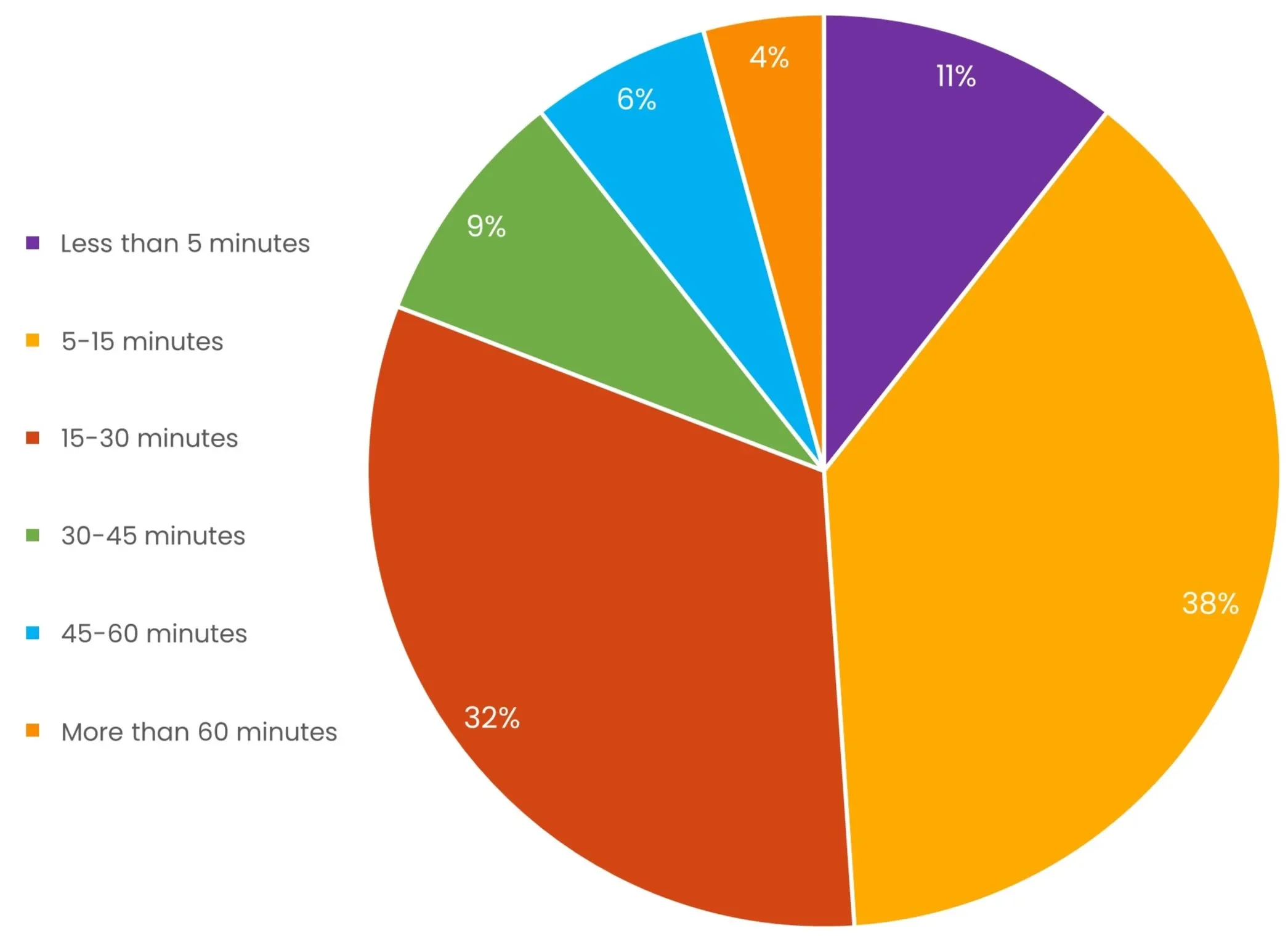
Insight: 70% of employees take between 5 and 30 minutes a day to research information, with the average being 30 minutes.
Problem: This is just wasted working time with no real added value for the customer. The employees also know that this makes it difficult for them to achieve their annual targets.
Please briefly describe a situation in which you were unable to find a document: Which file system was involved? How long did you search? What were you looking for?
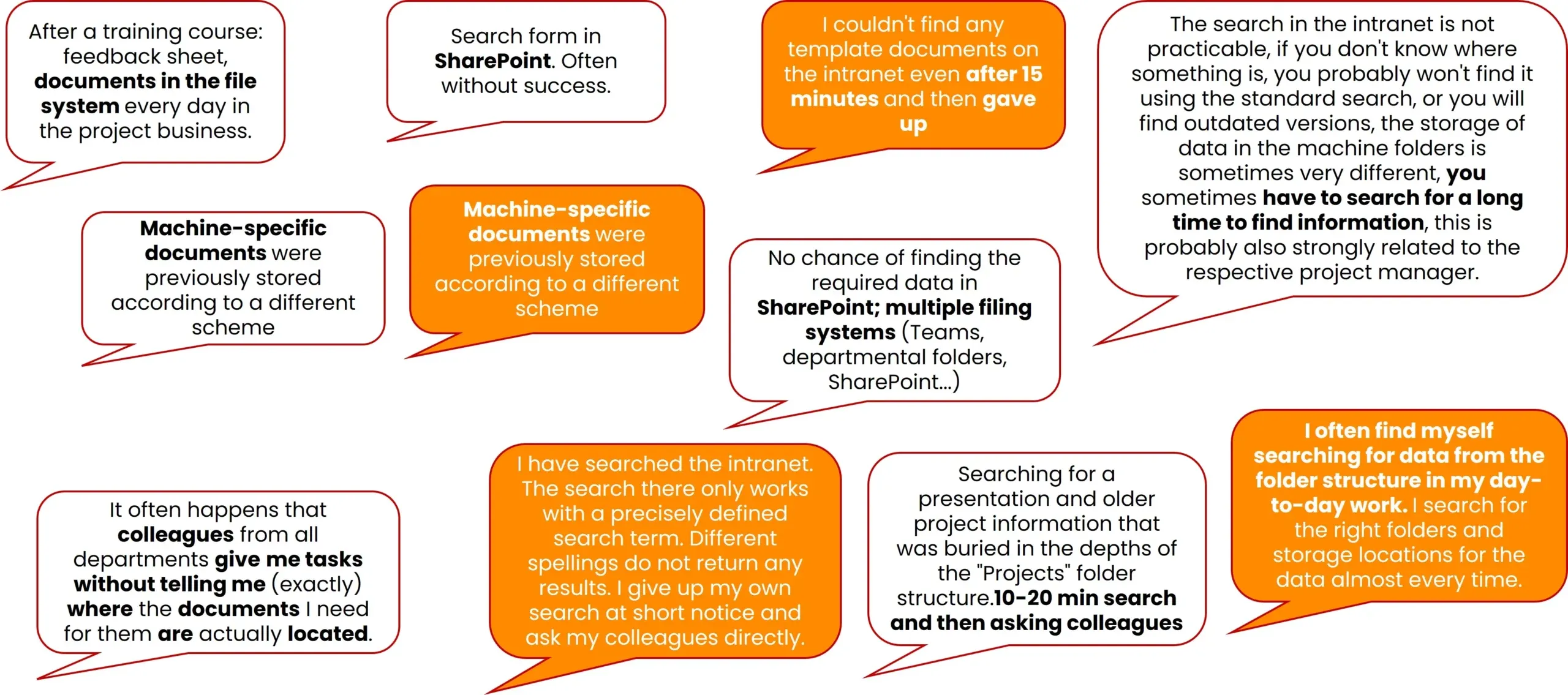
- Not only is the search in individual (different) systems weak, but a search across different systems is non-existent. This is particularly difficult if filing systems/storage locations have been changed over time.
- There is no single use case. There are many different situations in which employees are frustrated when they are unable to find information on their own. Therefore, highly specialised searches will always lose out to general searches.
- Search times of 5–10 minutes per piece of information were regularly mentioned, sometimes even longer. This sometimes happens several times a day.
What are the consequences for you or your company if documents or information cannot be found reliably?
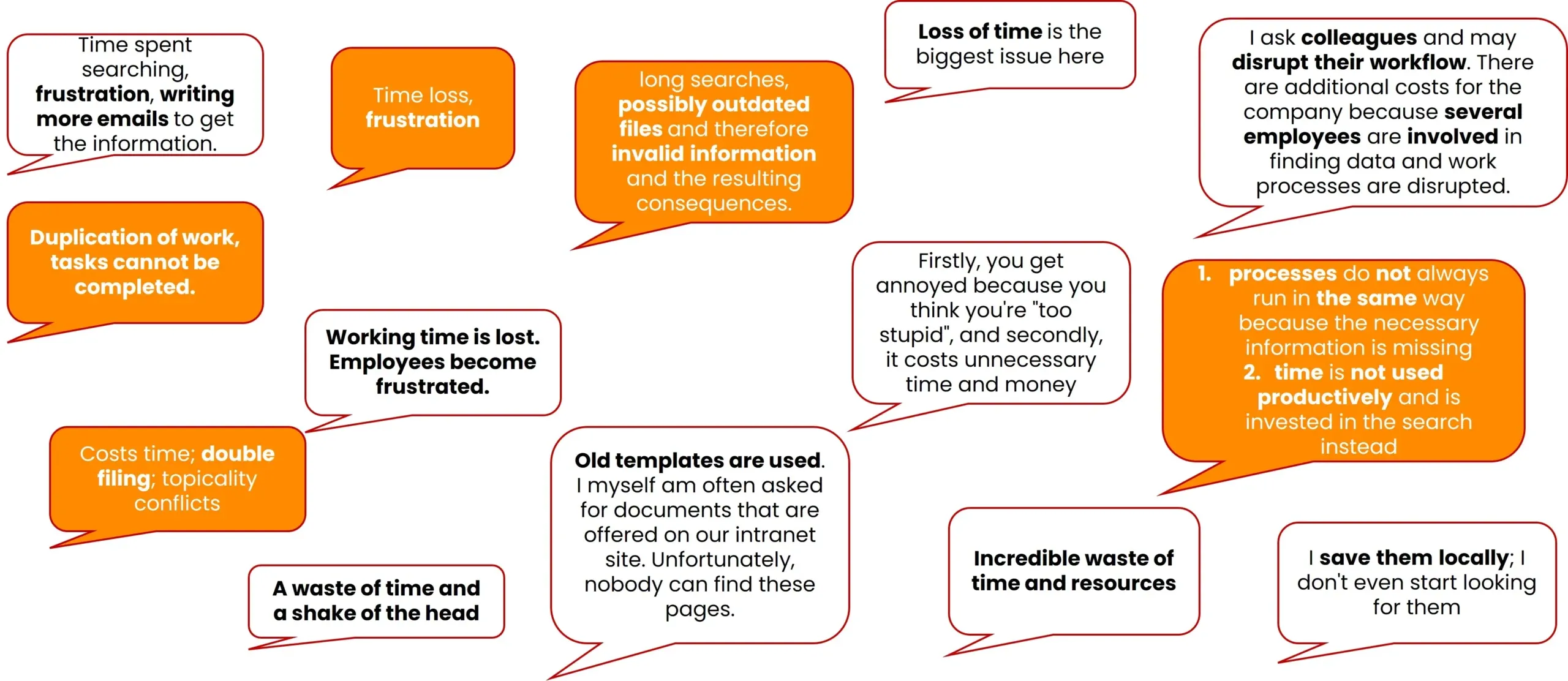
By the way, you can also carry out the survey in your company. We have prepared a revised questionnaire for you here. You can use it directly to work out the values for your own company.
What does it cost companies not to respond?
It is very clear from the survey presented here that employees are well aware of how much time is wasted on internal company research – both for the company and for the employee.
This problem gives rise to three major core issues:
| Problem | Consequence |
|---|---|
| Frustrated employees | Instead of working with/for/on customers, employees are preoccupied with themselves and do not achieve their goals. |
| Waste of time | Instead of pursuing value-adding activities, time is spent on duplicate work. |
| Poor decisions | Those who do not find the right information have a poor basis for decision-making and therefore make poor or even wrong decisions. |
Frustrated employees
- Consequence
- Instead of working with/for/on customers, employees are preoccupied with themselves and do not achieve their goals.
Waste of time
- Consequence
- Instead of pursuing value-adding activities, time is spent on duplicate work.
Poor decisions
- Consequence
- Those who do not find the right information have a poor basis for decision-making and therefore make poor or even wrong decisions.
The frustration felt by employees is clear to see from the survey. In times of skills shortages, frustrated employees are unnecessary reasons to lose staff.
In order to break down the “perceived truth” into more than just subjective issues, a business case can also be calculated from the data presented. This looks as follows:
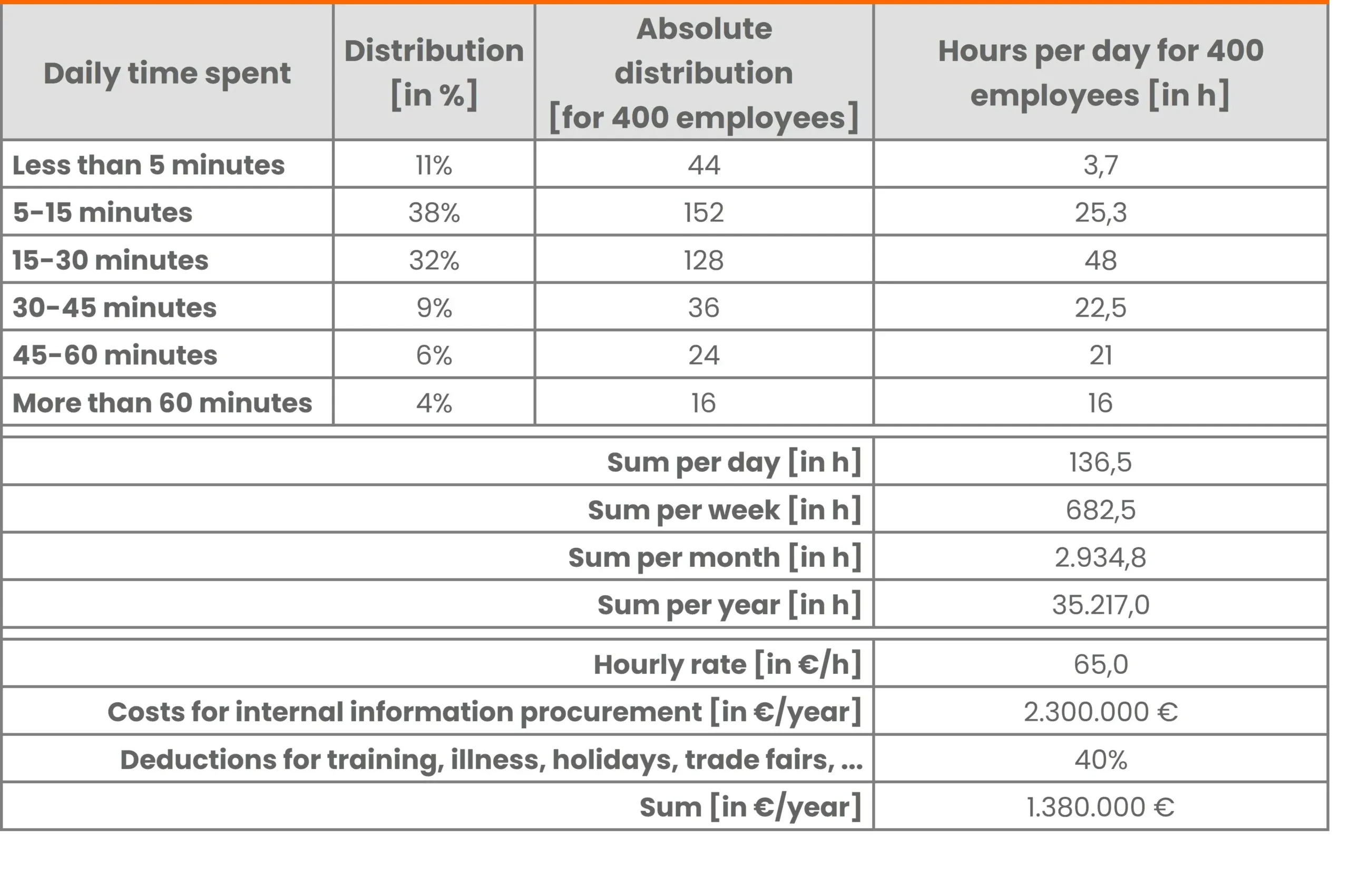
As can be seen in the table, we have multiplied the average time of the intervals by the absolute distribution in order to calculate the wasted time in hours per day for 400 employees. We then extrapolated this time to the year and multiplied it by an imputed hourly rate of €65. We have taken into account the fact that employees are not always at the computer due to sick days, holidays, trade fair visits etc. with a discount of 40%.
This means that a company with 400 employees wastes around €1,400,000 every year because employees have poor access to information. The dissatisfaction that employees experience is an additional cost.
Assuming the same distribution, the calculation for other numbers of employees is shown below:
| Employees affected [FTE] | Monthly wasted effort |
|---|---|
| 50 | 14.375 € / Month |
| 100 | 28.750 € / Month |
| 200 | 57.500 € / Month |
| 300 | 86.250 € / Month |
| 500 | 143.750 € / Month |
| 750 | 215.625 € / Month |
50
- Monthly wasted effort
- 14.375 € / Month
100
- Monthly wasted effort
- 28.750 € / Month
200
- Monthly wasted effort
- 57.500 € / Month
300
- Monthly wasted effort
- 86.250 € / Month
500
- Monthly wasted effort
- 143.750 € / Month
750
- Monthly wasted effort
- 215.625 € / Month
Table 2: Conversion of the monthly costs of poor information procurement for different company sizes
There is a better solution with amber!
When we founded amber, we primarily had a subjective feeling about the figures presented so far. However, we have now been able to back these up with facts.
So how much potential is there in a solution like amber?
amber consists of 2 components:
- The search (amber) – this enables employees to find information “Google-like” in their internal systems.
- The chat (amberAI) – this enables employees to have internal company information prepared “ChatGPT-like”.
With our customers, we have managed to reduce internal search times by up to 40% with our solution. This is, of course, the purely financial aspect. Values such as increased employee satisfaction, the further development of internal company processes towards, for example, New Work with AI, or better quality decisions are not yet included here. If you visualise the values that we receive from our customers, you can calculate the following values from the search time alone:
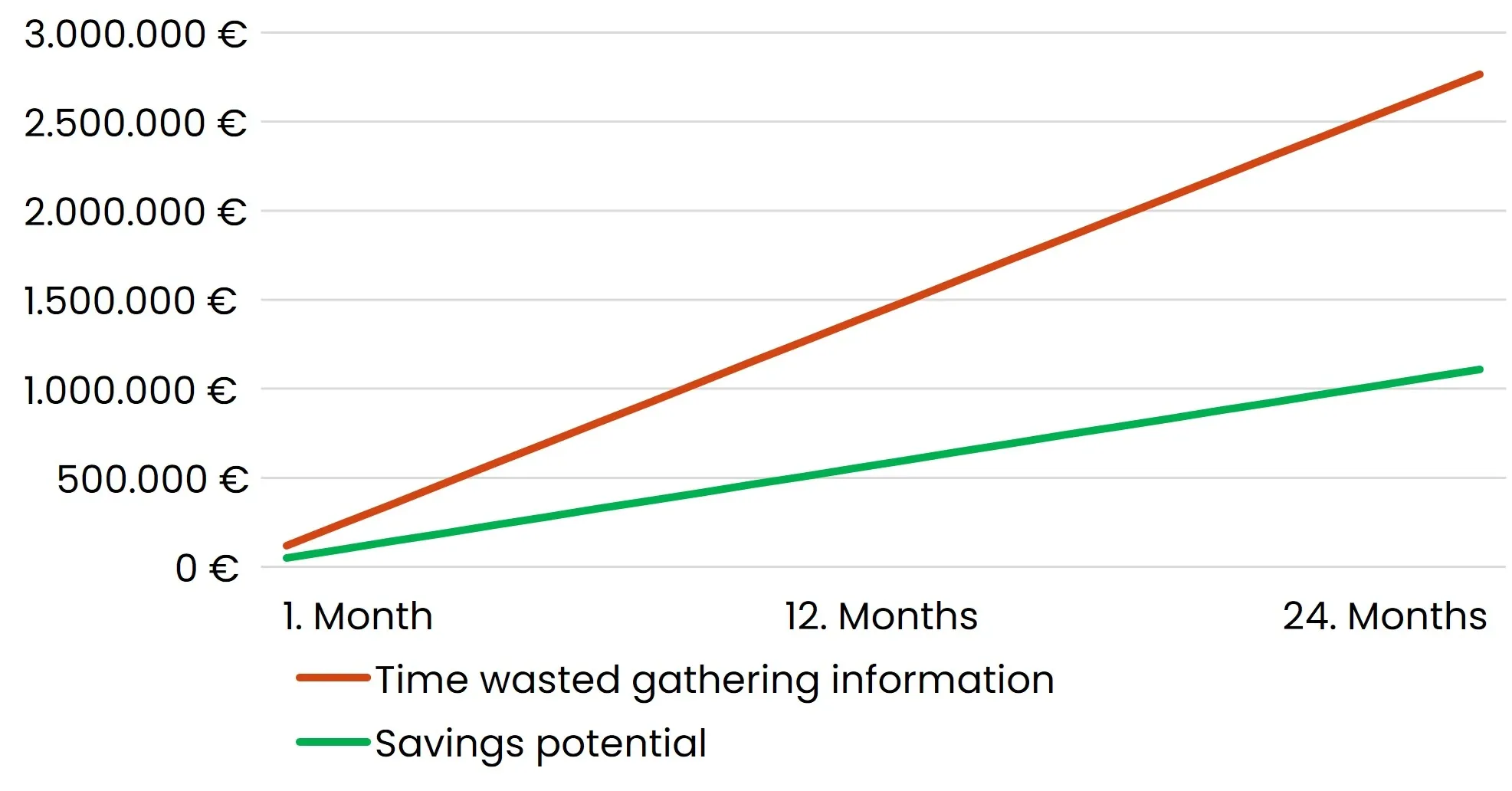
Figure 5 clearly shows that a company with 400 employees has the potential to save €1,000,000 if Enterprise Search is fully implemented from the outset.
There is no reason to wait.
To make the use cases of amber even more tangible, we have been publishing more content on our YouTube channel since 2024.
What we are realising is that generative AI is making use cases in companies so flexible that it is no longer possible to focus on a very specific or exclusive use case. To find out your own use cases, we can only recommend trying amber yourself or working with us to analyse where the potential lies in your company. We would be happy to help you recognise this potential.
Alternatively, write to us directly via the contact form and we will look at the situation in your company together with you.
Frequently asked questions about the cost of internal search
How much time do employees spend on internal searches every day?
According to a survey amber conducted in 2022, employees spend between 25 and 30 minutes a day searching for internal company information. In amber's own study in a company with 400 employees, 70% needed between 5 and 30 minutes a day, with the average being 30 minutes.
What does poor information search cost a company with 400 employees?
Extrapolated to the year with an imputed hourly rate of €65 and a 40% discount for sick days, holidays, trade fairs etc., a company with 400 employees wastes around €1,400,000 every year. The dissatisfaction of employees is an additional cost.
What are the consequences if information cannot be found reliably?
Three core issues arise: frustrated employees who do not achieve their goals, wasted time spent on duplicate work, and poor or even wrong decisions based on a poor basis for decision-making.
What is the “anyway-there bias”?
Many decision-makers regard search time as negligible because employees are “there anyway”. Yet a few minutes per person per day add up very quickly, and hardly anyone admits to spending hours every week searching.
How much search time can amber save?
With amber's customers, internal search times have been reduced by up to 40%. A company with 400 employees has the potential to save €1,000,000 if Enterprise Search is fully implemented from the outset.